

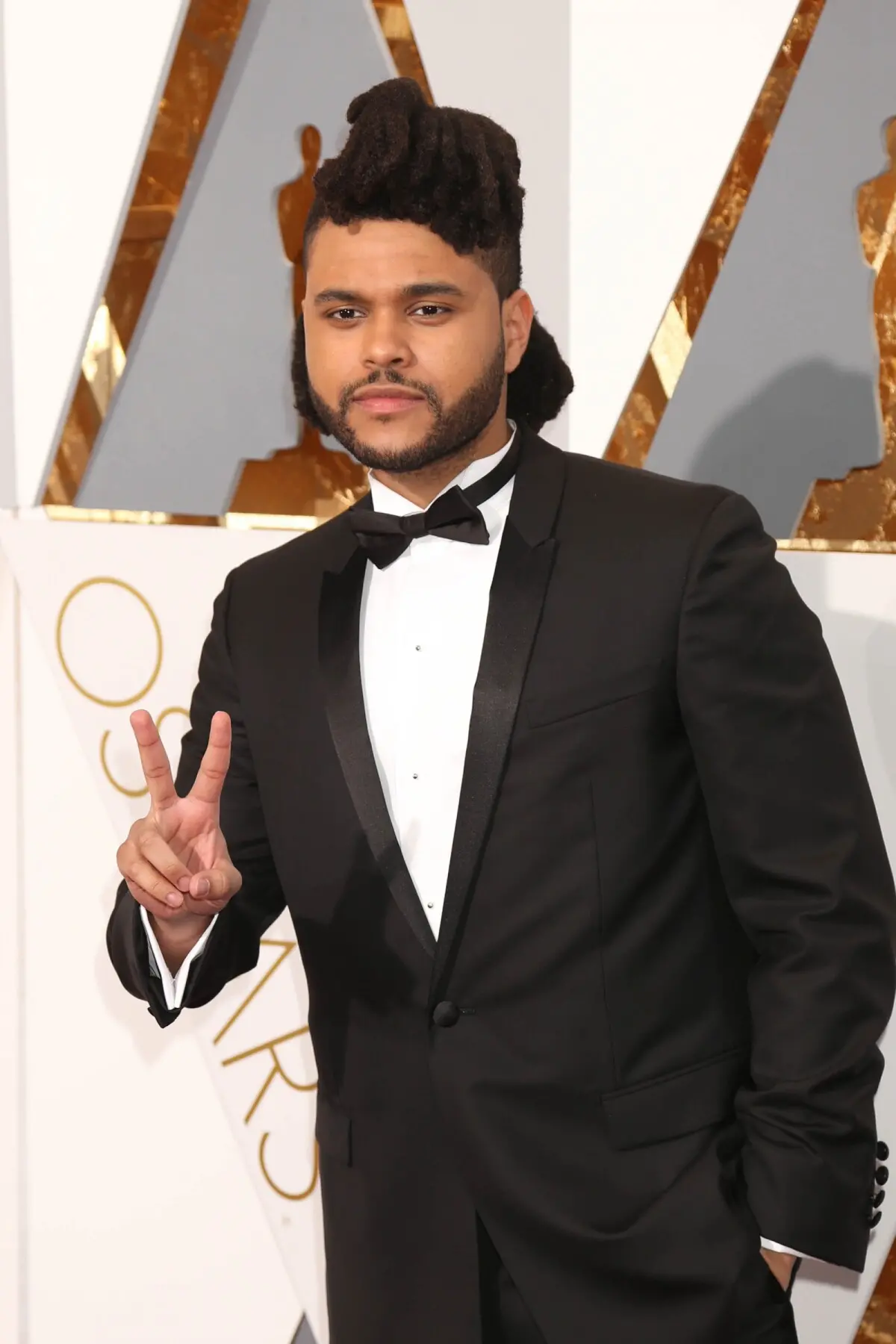
Key facts at a glance
- Abel Makkonen Tesfaye, professionally known as The Weeknd, appeared at the photocall for the 88th Academy Awards.
- The event was held at the Dolby Theatre in Hollywood on February 28, 2016.
- The Canadian singer was scheduled to perform Earned It, a Best Original Song nominee from the film Fifty Shades of Grey.
- His look drew attention for a new haircut, a noticeable departure from the tall dreadlocks associated with his early career.
- At the time, he was also widely covered as the boyfriend of model Bella Hadid.
- The 2016 awards season marked a major commercial and critical peak after the release of Beauty Behind the Madness.
A red-carpet arrival with a different silhouette
On February 28, 2016, Abel Makkonen Tesfaye, known worldwide as The Weeknd, arrived at the Dolby Theatre in Hollywood for the 88th Academy Awards. Before the ceremony, he took part in the official photocall, posing for a bank of photographers in the formal setting that has become a fixture of Oscar weekend. The appearance placed him among the night's music nominees and performers, but it also became a fashion and grooming story. For an artist who had built part of his early mystique around a very specific visual signature, the stop at the photocall offered a clear look at a new chapter. The most discussed detail was his hair: shorter, neater, and far removed from the towering dreadlocks that had defined his image during his rise.
The change was not simply a cosmetic update. In pop culture, a performer's silhouette can function as a brand. The Weeknd's early visuals were inseparable from a moody, enigmatic persona: the hair, the dark tailoring, the guarded interviews, and the cinematic gloom of his mixtapes. By early 2016, however, his public profile had expanded far beyond the alternative R&B underground. He was a chart-topping singer, a Grammy winner, and an Oscar nominee. A sharper haircut fitted that broader transformation. It suggested a move toward classic Hollywood polish without abandoning the brooding atmosphere that made his music distinctive.
The timing was significant. The 2016 Oscars took place at the end of a remarkable awards season for the Toronto-born singer. His second major studio album, Beauty Behind the Madness, had been released in August 2015 and had turned him from a cult favorite into a mainstream star. The album produced hits including Can't Feel My Face and The Hills, both of which reached the top of the Billboard Hot 100. Earned It, his contribution to the Fifty Shades of Grey soundtrack, had become another global success. By the time he reached the Dolby Theatre, he was operating in a different professional sphere from the one that had produced his early mixtapes.
From Toronto mixtapes to Oscar nominee
Tesfaye was born in Toronto on February 16, 1990, to Ethiopian parents. He grew up in the city's Scarborough area and began making music under the Weeknd name in the early 2010s. The name, deliberately omitting the final vowel, became part of a carefully constructed identity. In 2011 he released three mixtapes — House of Balloons, Thursday, and Echoes of Silence — that combined dark, hazy production with lyrics about excess, alienation, and complicated relationships. The projects circulated widely online and attracted attention from major artists, including Drake. In 2012, the mixtapes were collected as Trilogy, introducing the material to a larger audience.
The next phase moved him toward the center of pop. His debut studio album, Kiss Land, arrived in 2013, followed by the soundtrack success of Earned It in 2015. That song, written for the adaptation of Fifty Shades of Grey, showcased a more polished, swooning side of his sound. It reached the top five of the Billboard Hot 100 and earned an Academy Award nomination for Best Original Song. The nomination placed him in a small group of contemporary pop and R&B artists invited to compete in one of film's most visible categories. At the 88th Academy Awards, he performed the song on the same night that Sam Smith's Writing's on the Wall ultimately won the category.
The Oscar performance was an important platform. The ceremony was broadcast globally, and the Best Original Song performances were among the most anticipated musical moments of the night. For The Weeknd, the appearance represented a crossover into film music and established awards-show territory. It also showed how far his sound had traveled from the lo-fi mystery of the early mixtapes. The same artist who had once seemed to exist in the shadows of online R&B was now singing a ballad in prime time at the Dolby Theatre. The photocall captured him at that intersection: a musician promoted as both an edgy alternative and a formal Hollywood guest.
A haircut that became part of the story
Reports about the appearance focused quickly on his change of hairstyle. The Weeknd had become recognizable for a high, thick dreadlock style that framed his face and contributed to his otherworldly stage image. At the Oscars photocall, he appeared with a shorter cut that gave him a cleaner, more conventional red-carpet profile. The shift was interpreted by fans and style watchers as a sign of maturity, reinvention, or simply a desire for a new look at the start of a busy year. Whatever the motivation, the haircut became a talking point alongside his tuxedo, his nomination, and his relationship with Bella Hadid.
The attention was typical of the way modern celebrity coverage works. A single appearance can generate multiple narratives: the music story, the fashion story, the relationship story, and the image-change story. In this case, all four converged. The Weeknd was not a newcomer seeking attention; he was a proven hitmaker whose personal style had already become part of his public identity. A change in that style therefore carried more weight than a routine grooming update. It signaled that the artist was willing to revise the visual language that had helped make him famous. For a performer whose early era was built on mystery, allowing the public to see a more streamlined version of himself was a meaningful shift.
Bella Hadid and the celebrity spotlight
At the time, The Weeknd's appearance was also covered in connection with Bella Hadid, the model and television personality. The two had become one of the most photographed young couples in entertainment, and their relationship brought additional attention to his red-carpet moments. The phrase used in early coverage — that the singer was Hadid's boyfriend — reflected how closely his personal life had become entangled with his public image. Yet the singer generally kept his romantic life separate from his music's promotion. The Oscars photocall was therefore a rare point where the professional and personal stories overlapped in the same frame.
Hadid's own career was rising in 2016, and the pair's appearances together generated significant media interest. Their relationship was followed by tabloids and fashion outlets, but it did not define his musical achievements. The Oscar nomination and performance were the primary professional facts of the night. Still, the coupling of a major music star and a high-profile model added a layer of glamour to the event. For readers, the headline about a new haircut was an accessible entry point into a larger story about fame, image, and the demands of the awards circuit. The detail was small, but it illustrated how closely modern pop stardom is tied to visual presentation.
The 88th Academy Awards themselves were shaped by broader industry debates. The ceremony, hosted by Chris Rock, took place amid intense criticism over the lack of diversity among the acting nominees. The controversy, often summarized with the hashtag OscarsSoWhite, dominated pre-show coverage and became part of Rock's monologue. The Weeknd's performance and nomination occurred within that wider conversation about who gets recognized in Hollywood. As a Black Canadian artist nominated in the Best Original Song category, his presence was part of the evening's musical programming, even though the night's biggest acting categories remained at the center of the diversity debate.
The ceremony also reflected the growing relationship between pop music and film. Best Original Song nominations had long offered pop stars a route to the Oscars, from power ballads to contemporary hits. The Weeknd's Earned It was part of that tradition: a song tied to a major film, promoted through radio and streaming, and performed on the broadcast. Its nomination demonstrated how a single soundtrack cut could extend an artist's reach beyond their own albums. For The Weeknd, the Oscar campaign came after a Grammy-winning season, reinforcing the sense that 2016 was a breakthrough year across multiple entertainment platforms.
What the moment represented
The photocall image captured a star in transition. The Weeknd had spent the first half of the decade building a reputation for dark, insular music and an equally distinctive look. By 2016, he had become a mainstream figure whose songs were played in arenas and whose appearances were covered by general news outlets. The new haircut was a visual marker of that change, but it was not the change itself. The deeper transformation was in his career: from mixtape artist to chart-topper, from online cult figure to Oscar nominee, from alternative R&B outsider to awards-season regular. The Dolby Theatre stop reflected all of those shifts in a single public appearance.
The event also showed how awards-season exposure can reshape an artist's image. A photocall is not a performance, yet it can influence how the public perceives a celebrity. In The Weeknd's case, the formal setting placed him alongside actors, directors, and other film-industry figures. It encouraged a more polished presentation while still relying on the intrigue that had made him distinctive. The short hair did not erase his earlier persona; it updated it. Fans could read the change as growth, while casual observers could see a modern pop star fitting comfortably into the Hollywood ritual.
In the years that followed, The Weeknd continued to evolve. His next album, Starboy, arrived later in 2016 and produced major hits, including the title track and I Feel It Coming. His sound moved further into electronic and pop territory, and his visual presentation continued to change. The Oscars appearance therefore functions as a useful snapshot of a particular moment: before the Starboy era, after the Beauty Behind the Madness breakthrough, and during a period when his relationship with Bella Hadid kept him in the celebrity press. The new haircut was a small detail, but it marked a visible step in a long process of reinvention.
The 88th Academy Awards took place on February 28, 2016, at the Dolby Theatre in Hollywood. The Weeknd's participation as a performer and nominee placed him in the ceremony's musical lineup, while his photocall appearance gave photographers and fans a clear view of his updated style. The date, the venue, the nomination, the performance, and the haircut are the essential facts of the story. Together they explain why a brief red-carpet stop became more than a routine photo opportunity. It was a public record of an artist moving between eras, carrying the mood of his past while adapting to the expectations of a new level of fame.
Source: Purepeople News