

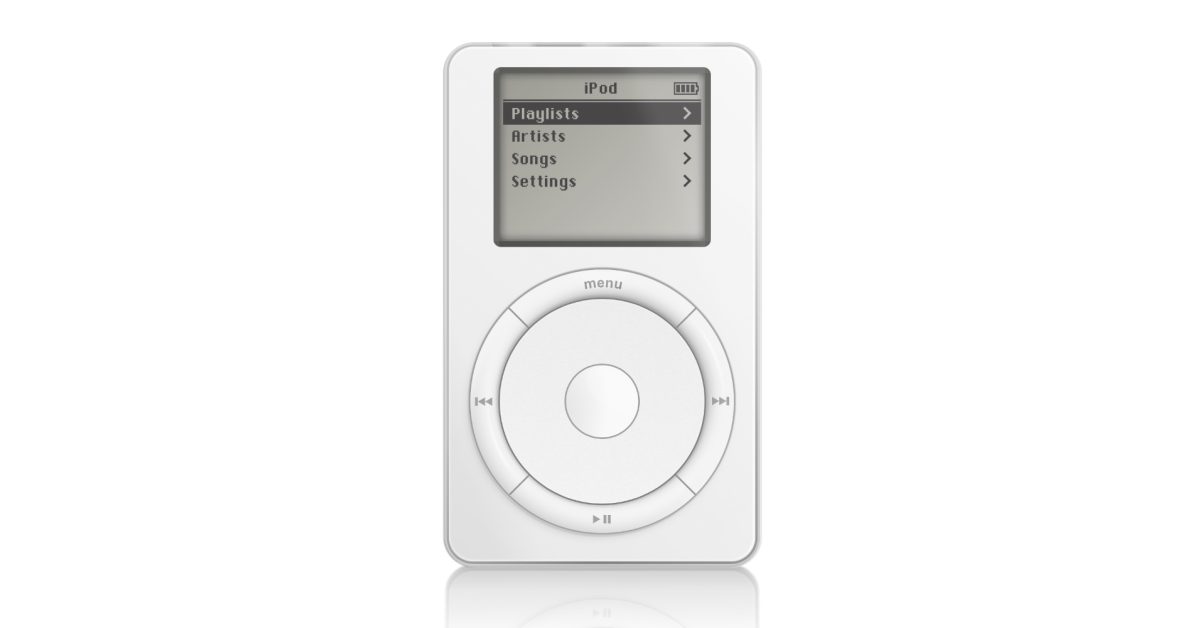
Apple has marked the 25th anniversary of the iPod with a playful surprise hidden inside its music service. Visitors who reach a nonexistent page on the Apple Music website are now greeted by a working digital replica of the original iPod. The Page Not Found screen has been transformed into a small piece of Apple history, giving users a chance to click, scroll, and listen just as they once did on the physical device. The easter egg arrives exactly 25 years after Apple introduced the first iPod on October 23, 2001, a moment that reshaped portable music and set the stage for much of the company’s later success.
The discovery is simple but effective. Instead of a standard error message, the page displays a detailed illustration of the first-generation iPod, complete with its monochrome screen, four control buttons, and scroll wheel. The controls are not decorative. Users can click the buttons to navigate the interface, move through menus, and select pre-installed songs. The scroll wheel responds to clicking and dragging, mimicking the circular motion that became one of the iPod’s most recognizable design features. The result is a fully interactive browser-based tribute rather than a static image.
What the Interactive iPod Can Do
The digital iPod includes a small library of music that reflects the era in which the original device launched. Apple has not packed the page with modern hits or a broad streaming catalog. Instead, the selection is designed to feel like a time capsule from 2001, when the first iPod was unveiled. Users can browse the pre-installed tracks and choose songs to hear 90-second previews directly in the web interface. That preview length is familiar to anyone who has used Apple Music or other streaming services, but hearing it through a simulated original iPod adds a nostalgic twist.
The interface also rewards curiosity. Clicking the menu button, play button, and directional controls changes the screen and lets users explore the device’s basic functions. Dragging the scroll wheel around its circle produces the tactile feel of the original click wheel, even though the interaction is happening on a computer or mobile browser. It is not a full software emulator, but it captures enough of the iPod experience to make the hidden page feel like a miniature museum exhibit. The easter egg is accessible without a download, account, or special app, which makes it easy for longtime fans and newer Apple users to try.
How the Hidden Page Works
The surprise appears when a visitor tries to open a path on the Apple Music website that does not exist. Rather than showing a generic error page, the service serves the interactive iPod. One example is the path /ipod, though any nonexistent path on the same site can trigger the same experience. This approach turns a routine dead end into a discovery. It also fits Apple’s long tradition of hiding small surprises in its software and marketing. From secret messages in product packaging to hidden responses in voice assistants, the company has often used easter eggs to reward attentive users.
The Page Not Found placement is especially fitting. The iPod itself is a discontinued product, so the error page becomes a clever metaphor: a device that is no longer sold but still has a place in Apple’s story. The page does not require users to sign in, and it does not push a subscription or a purchase. It simply offers a brief, interactive nod to the past. That restraint helps the tribute feel genuine. The focus remains on the device, its controls, and the music that defined its early years.
Why the iPod Still Matters
When Apple introduced the iPod in October 2001, the company was not yet the dominant force in mobile devices that it is today. The first iPod was a compact player with a hard drive, a mechanical scroll wheel, and a promise of carrying a large music library in a pocket. Its debut came at a time when portable music was dominated by CD players and early MP3 players that were often clunky or limited. The iPod’s combination of storage, software, and simple controls helped change expectations for what a personal music device could be.
The product line expanded quickly. Apple later introduced smaller and more affordable models, including the iPod mini, iPod nano, and iPod shuffle. It also pushed into touchscreen territory with the iPod touch, which brought apps, games, and internet features to a device that had once been focused on music. Over time, the iPod’s role changed. The iPhone, introduced in 2007, absorbed many of the functions that had made the iPod special. Streaming services further shifted how people listened to music. Apple discontinued the last remaining iPod model in 2022, ending a product line that had lasted more than two decades.
Even so, the iPod remains a cultural touchstone. It is remembered for its advertising, its white earbuds, and its click wheel. It is also remembered as a gateway product. For many users, the iPod was their first Apple device. It introduced them to iTunes, to digital music libraries, and to the idea that software and hardware could work together in a seamless way. The interactive easter egg draws on that emotional connection. It does not try to reinvent the iPod. It simply lets users revisit the feeling of holding one.
Key Facts at a Glance
- Apple unveiled the first iPod on October 23, 2001.
- The new easter egg marks the iPod’s 25th anniversary.
- It appears on the Apple Music website’s Page Not Found screen.
- The page shows a fully interactive original iPod model.
- Users can click the buttons and drag the scroll wheel.
- The device includes pre-installed songs from artists popular around the time of the launch.
- Users can play 90-second song previews in the web interface.
- The experience can be reached through a nonexistent path such as /ipod.
Design That Still Feels Familiar
The visual design of the easter egg matters as much as its interactivity. The original iPod was known for its clean lines, white face, and simple control layout. The digital version preserves those cues. The screen is small and monochrome, the buttons are arranged around the wheel, and the overall shape is instantly recognizable. For users who owned an early iPod, the image alone may bring back memories of scrolling through albums, watching the battery indicator, and using the click wheel to find a song.
The page also avoids overcomplicating the tribute. It does not add modern animations or a flashy interface. Instead, it lets the hardware design speak for itself. That choice mirrors Apple’s approach to the iPod itself: remove unnecessary elements and make the core interaction obvious. The scroll wheel, in particular, was a breakthrough because it allowed users to navigate long lists with one hand. The digital version recreates that motion by letting users click and drag around the circle. It is a small detail, but it shows how much of the iPod experience was tied to physical movement.
Music, Nostalgia, and a Time Capsule
The music selection reinforces the time-capsule quality of the page. The tracks are drawn from artists who were popular when the iPod first arrived. That decision helps the easter egg feel historically grounded. A modern playlist would have been easier, but it would not have captured the same moment. The early 2000s were a transitional period for music consumption. CDs were still common, digital downloads were growing, and the idea of carrying thousands of songs in a pocket was still novel. The iPod arrived in the middle of that shift and helped accelerate it.
The 90-second previews also connect the past and present. Preview clips have become a standard part of digital music services, but on the interactive iPod they serve a different purpose. They let users sample the simulated library without leaving the page. The experience is short by design, much like a visit to a museum exhibit. Users can click around, hear a familiar song, and then move on. The easter egg does not demand attention. It rewards it.
A Small Tribute With a Long Reach
The iPod’s 25th anniversary arrives at a time when Apple’s music business looks very different from the one that launched the device. Apple Music is now a subscription service available across phones, computers, tablets, speakers, and other devices. The company no longer sells a dedicated iPod, and the iPhone has become the primary way many people listen to music. Yet the iPod’s influence is still visible in the design of Apple’s products and in the way the company talks about music. The click wheel may be gone, but the idea of a simple, personal music experience remains central.
The hidden page is a reminder that Apple’s history is not only made of blockbuster launches. It is also made of small moments that users remember. The iPod was a product, but it was also a habit. People organized their libraries, made playlists, and carried their music with them. The interactive easter egg captures a piece of that habit in a browser window. It is playful, accessible, and brief, but it serves a useful purpose: it keeps the story of the iPod alive for anyone who takes the time to find it.
For now, the tribute remains a hidden surprise rather than a formal product announcement. It does not signal a return of the iPod or a new dedicated music player. It is simply a digital nod to a device that changed how people listened. Visitors who stumble onto the Page Not Found screen will find a working iPod, a set of era-appropriate songs, and a small reminder that even a discontinued product can still have a presence in the present.
Source: 9to5Mac News