

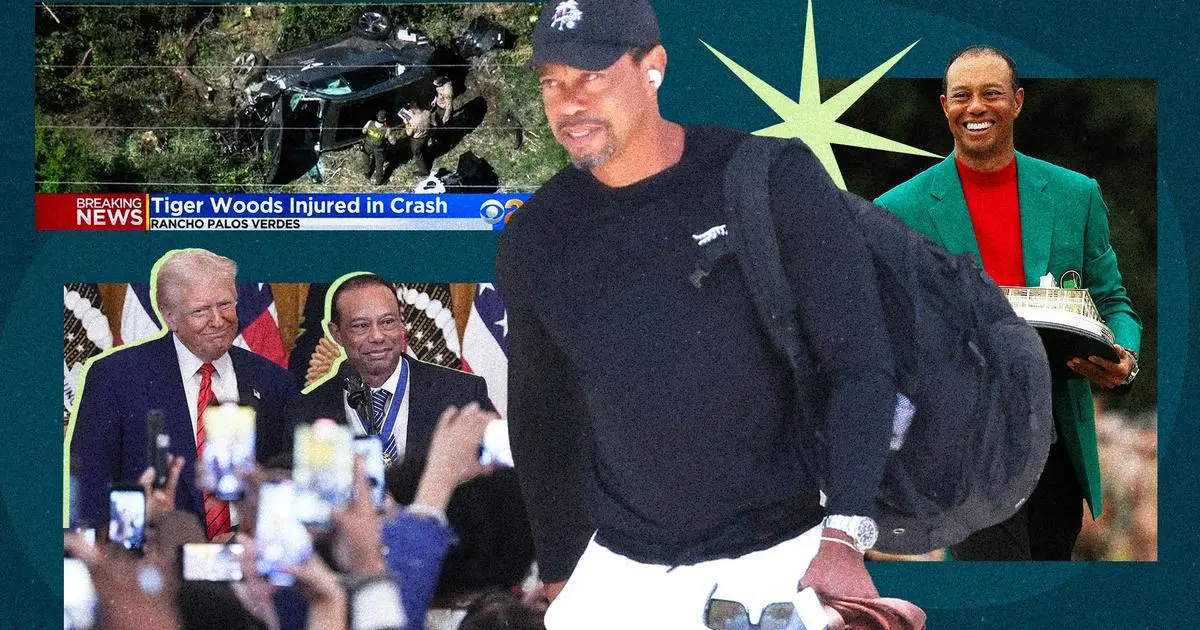
In the early hours of November 27, 2009, Tiger Woods crashed his Cadillac SUV into a fire hydrant and a tree outside his Florida mansion. His wife, Elin Nordegren, was reportedly holding a golf club, allegedly trying to break the car's windows to rescue him. The incident would soon shatter the carefully constructed image of the world's most famous golfer, exposing a web of affairs, addictions, and physical vulnerabilities that had been hidden for years.
At the time, Woods was at the peak of his athletic prowess. He had won 14 major championships and was widely considered the greatest golfer of all time, with a personal fortune exceeding $1 billion. But behind the scenes, his life was unraveling. The crash was the result of a heated argument after his wife discovered text messages from Rachel Uchitel, a nightclub hostess with whom Woods had been having an affair. In the days that followed, more than a dozen women came forward claiming sexual relationships with Woods, including porn stars, waitresses, and even a neighbor.
Woods initially denied the allegations, but when he finally issued a public apology in February 2010, he admitted to infidelity and announced he would be taking an indefinite break from golf to undergo treatment for sex addiction. The confession was a stunning fall from grace for a man who had been marketed as the clean-cut, family-friendly champion. But the sex addiction was just one part of a deeper pattern of destructive behavior fueled by a lifetime of pressure and pain.
Tiger Woods was born Eldrick Tont Woods on December 30, 1975, in Cypress, California. His father, Earl Woods, was a former Green Beret who had served two tours in Vietnam. Earl was determined to raise a champion, introducing Tiger to golf at the age of two and pushing him relentlessly through a rigorous training regimen. Tiger once described his father as 'my best friend and my worst enemy,' and the psychological toll of this upbringing would later manifest in his adult life.
Tiger's early career was meteoric. He won his first major at the 1997 Masters by a record 12 strokes, and by 2002 he had completed the career grand slam. His athleticism and mental toughness revolutionized golf, attracting a global audience and earning him unprecedented endorsement deals from Nike, American Express, and others. Between 2000 and 2001, he held all four major titles simultaneously, a feat never before accomplished. But the physical demands of his explosive swing began to take a toll.
Woods first injured his left knee in 1994, but he continued to play through pain. By 2008, the damage was severe enough that he played the U.S. Open on a fractured tibia and a torn ACL, winning the tournament in a playoff. Immediately afterward, he underwent reconstructive knee surgery and missed the rest of the season. The following year, he had another procedure to repair a torn Achilles tendon. These surgeries were the beginning of a long battle with chronic pain that would lead him to rely on prescription painkillers.
After the 2009 scandal, Woods returned to golf in 2010 but struggled to recapture his form. He lost endorsements, divorced Elin, and saw his world ranking plummet. Meanwhile, his back problems worsened. In 2014, he underwent a microdiscectomy to relieve a pinched nerve, but the relief was temporary. By 2015, he had had two more back surgeries, and his game deteriorated to the point where he missed the cut at the 2015 Masters and later withdrew from the tournament entirely, citing back spasms.
In May 2017, Woods was arrested in Jupiter, Florida, on suspicion of driving under the influence. He was found asleep at the wheel with the engine running, and subsequent tests showed the presence of multiple painkillers, including Vicodin and Xanax, as well as marijuana. He later admitted to a dependence on prescription drugs and entered a rehabilitation program for medication management. The DUI arrest was the public's first glimpse of his addiction problem, though those close to him had seen it for years.
Woods has since undergone five back surgeries, including a spinal fusion in 2017 that eventually allowed him to return to competitive golf. In 2019, he won the Masters for the first time in 11 years, completing one of the greatest comebacks in sports history. But the physical toll continued. In February 2021, he was involved in a serious car crash in Los Angeles, sustaining compound fractures in his right leg and foot. He was lucky to survive, and a lengthy rehabilitation followed. It was later revealed that he had been speeding and had no brakes applied at the time of the crash, though drugs or alcohol were not suspected.
Woods' injuries are not just athletic setbacks; they are interwoven with his psychological struggles. Numerous reports suggest that he battled sex addiction, which he attempted to address through rehabilitation. Some experts argue that the addiction was a symptom of deeper emotional issues related to his father's intense training and his own inability to handle the pressure of being a global icon. The compulsive behaviors were also driven by the pain from his surgeries; painkillers and sexual encounters provided temporary escape from the constant physical anguish.
The interplay between injuries and addictions created a vicious cycle. Each surgery led to more pain and more medication; each relapse into sexual infidelity destroyed relationships and trust. The 2009 crash was a literal manifestation of this collision of forces: a man hopped up on sleeping pills fleeing a domestic fight, driving blindly into the night. The 2017 DUI arrest was another example: a washed-out champion mixing pills and alcohol to numb his pain. Even the 2021 crash, though not linked to substances, highlights his ongoing physical deterioration and perhaps a reckless disregard for his own safety.
Through it all, Woods has tried to portray a return to normalcy. He remarried in 2016 (though he later separated from his wife) and continues to play in limited tournaments. His relationship with his children has been a stabilizing influence, and he has spoken publicly about the importance of being a good father. But the dark side of his life remains a cautionary tale about the cost of fame and the fragility of athletic superhumans.
Woods' story is also a reflection of how the sports world often ignores athletes' personal struggles as long as they keep winning. The PGA Tour and Woods' sponsors turned a blind eye to his injuries and erratic behavior for years, only stepping in when the scandals became public. Even after the 2009 revelations, many fans and media outlets were more concerned with his comeback than his well-being. It is only in recent years, with the rise of mental health awareness in sports, that Woods' struggles have been viewed with more nuance.
Today, Tiger Woods is no longer the dominant force he once was. He has not won a major since 2019, and his body has limited him to playing only a handful of events each year. Yet he remains a figure of fascination, both for his genius on the course and his turmoil off it. His legacy is complicated: a champion who broke every record but also a man who nearly destroyed himself and those around him. As he ages, the question lingers: what will be the final chapter of this chaotic trajectory? For now, the world watches, knowing that the dark side of Tiger Woods is as much a part of his story as his green jackets and trophy cases.
Source: Le Figaro News