

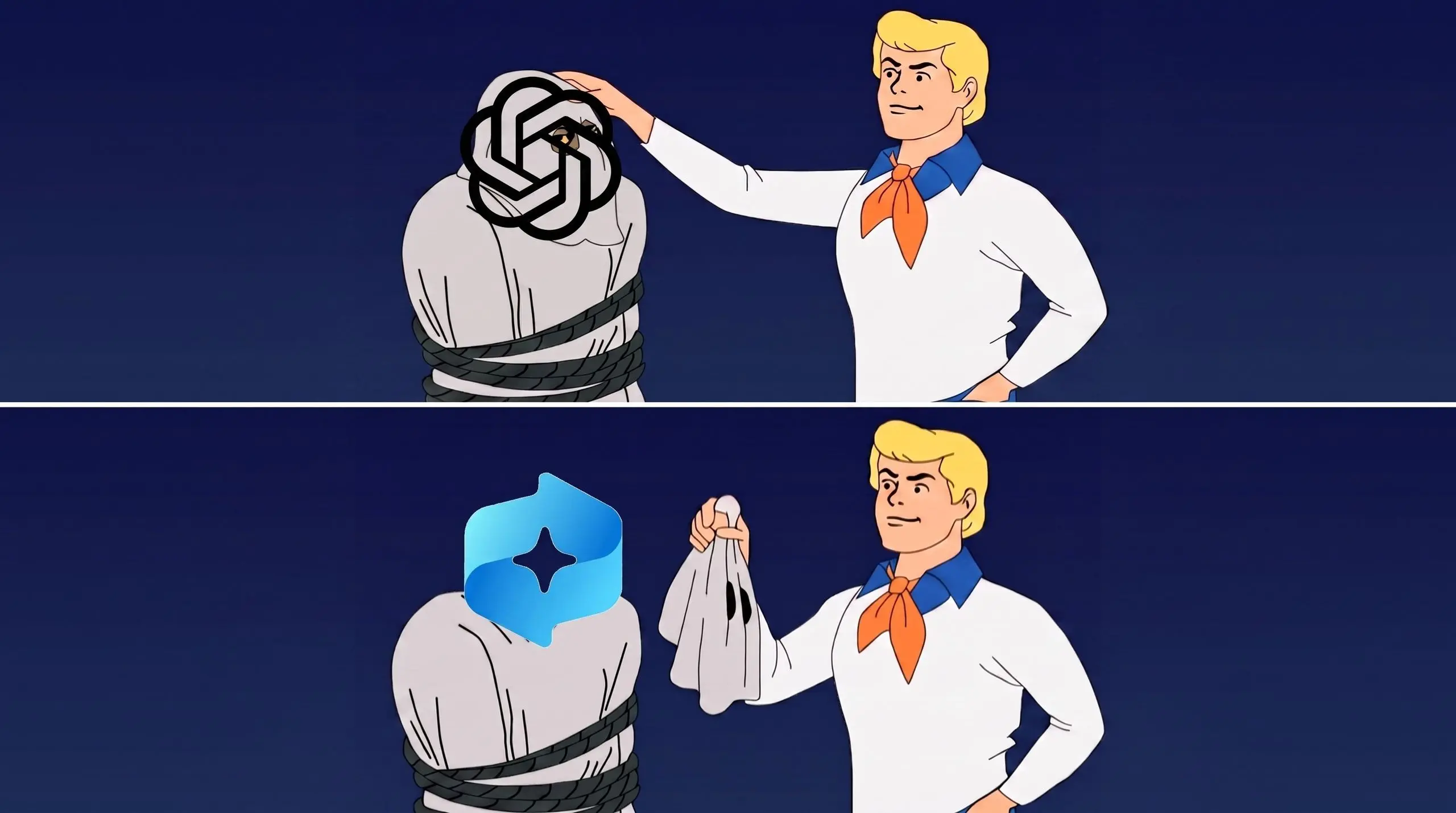
OpenAI is rolling out a new feature for ChatGPT on macOS that has already stirred significant debate: a screen recall capability that periodically captures what’s displayed on a user’s screen. The feature has drawn immediate comparisons to Microsoft’s Recall, an AI-driven screenshot tool for Windows 11 that faced an avalanche of criticism upon its announcement in 2024. Now, with OpenAI bringing a similar concept to Mac, the essential question is whether history will repeat itself — or whether OpenAI has learned from Microsoft’s missteps.
What Is Windows 11’s Most Hated Feature?
Launched in May 2024 as a signature addition to Microsoft’s Copilot+ PC initiative, Recall was designed to let users search through their past activity on the computer by taking a screenshot every few seconds. The feature created a permanent, searchable timeline of nearly everything that appeared on the screen — including emails, websites, documents, and even passwords or personal images. Microsoft pitched it as a way to help people find previous work and information without manual bookkeeping.
However, the backlash was immediate and intense. Privacy advocates and cybersecurity researchers pointed out that the default-on nature of Recall would allow any process running on the system to access the sensitive data captured in the screenshots. While the captures were stored locally and encrypted, any malicious software that gained user privileges could potentially exfiltrate this raw data. Security expert Kevin Beaumont described it as a "disaster" for privacy. Following the blowback, Microsoft delayed the launch, moved to an opt-in model, and added additional security measures such as Windows Hello authentication and encryption.
The controversy became a defining moment for Windows 11, cementing Recall's status as one of the most disliked and mistrusted features in recent Microsoft history. The memory of this backlash still looms large over the industry, making it all the more surprising that OpenAI would choose to test similar waters on a different platform.
What Does ChatGPT’s New Mac Feature Do?
The new ChatGPT feature, enabled in the latest macOS desktop app, brings a similar concept to Apple users. By default, it is prominently accessible via a shortcut that lets the AI capture the current screen contents and store them in a localized memory index. This index is used by ChatGPT to answer questions like "What was the article I was reading yesterday?" or "Remind me what my boss wrote in that email last week." The entire process runs locally in the system's storage, with the capability to disable it entirely.
OpenAI describes the feature as a step toward more context-aware AI, enabling the assistant to offer more relevant suggestions and proactive support. In promotional materials, the company emphasizes that the feature is opt-in, encrypted, and never shared with servers unless the user explicitly asks for cloud-based processing. It is also possible to pause or reset the memory index at any time.
The technical implementation appears to avoid some of the obvious pitfalls of Microsoft's original design. For one, the screenshotting can be paused while the system detects sensitive fields like passwords or credit card numbers. Additionally, the capture is only triggered after an explicit command from the user to create a snapshot, rather than on a fixed timer. Yet critics argue that the very nature of screen recording remains a high-risk capability, regardless of these improvements.
Privacy on Mac: Are Expectations Different?
Mac users are generally considered more privacy-conscious than the average Windows user — a perception Apple has carefully cultivated over the years. The company's advertising has repeatedly emphasized on-device processing, data minimization, and resistance to government demands for data access. This environment means any feature that scans, captures, or remembers screen content will be scrutinized far more intensely than it might be on a less privacy-focused platform.
Even if OpenAI has added safeguards, the mere presence of a screen capture feature could undermine the simplicity and security that many Mac users expect. A single security flaw, or even a reported leak of screen data, could create a trust deficit that no feature can temporarily justify. Furthermore, in the wake of Apple’s own push into AI with "Apple Intelligence," users may wonder whether a third-party AI tool needs this level of access in the first place.
What OpenAI Is Doing Differently
OpenAI has been careful to position the new feature as a stark difference from Microsoft's original Recall approach. The company notes that Recall was set to be enabled automatically, while ChatGPT's screen memory is an explicit control: users must turn it on after a clear explanation of its implications. During initial setup, the app presents a detailed summary of how the feature works, what data is stored, and how to delete it. This is a deliberate contrast to the chaotic rollout Microsoft experienced.
The feature also leverages Apple’s App Sandbox and entitlements to restrict access to specific user-selected directories. In addition, the local database is protected by macOS FileVault encryption, and the app requests screen capture permission through the standard macOS TCC (Transparency, Consent, and Control) framework. As a result, users have a degree of system-level control over what ChatGPT can see and when — a significant step beyond the initial Recall framework.
OpenAI has also announced an independent security audit of the feature prior to public release, with the final report to be made available on its blog. While audit findings are not the same as a guarantee, they at least provide a third-party assessment of how the data is handled and whether there are any inherent vulnerabilities.
Potential Problems That Remain
Despite these safeguards, there are reasons for concern. The first is that screen contents often include information that is not easily categorized as sensitive until the moment it appears. A moment's display of a password manager window, a private message notification, or a medical spreadsheet could be automatically included in the screenshot database. Even with smart filtering, edge cases are unavoidable.
The issue is compounded by the fact that ChatGPT itself is a cloud-based service. Even if the feature stores screenshots locally, any deep analysis of that data could be sent to OpenAI's servers. The company says that data is only processed in the cloud when the user chooses to ask a question that requires full context. But that leaves the door open for accidental exfiltration during troubleshooting, debugging, or feature improvement.
There is also the risk of malware on the Mac. While macOS is widely considered to be more secure than Windows in many respects, no system is fully immune. Once a screenshot is stored on disk, a malicious application with the same user permissions could read it. The ChatGPT app itself, if compromised, could act as an exfiltration vector. This is not a new problem unique to OpenAI, but the feature creates a rich target for attackers.
Did OpenAI Learn From the Recall Incident?
The short answer is yes — at least on the surface. The roll-out approach is a masterclass in how to avoid the public relations disaster that Microsoft faced. OpenAI chose to launch first on Mac, a niche platform compared to Windows, to test the waters with a smaller, more privacy-aware audience. It also made the feature opt-in from the start, rather than turning it on by default and waiting for backlash to force a reversal.
Yet the fundamental question remains: Is a screen capture feature fundamentally incompatible with user privacy? Some security researchers argue that any feature that relies on a system-level memory of the screen is too dangerous, because it creates an unavoidable login for human-readable personal data. The entire point of Recall was to give an AI model unfiltered access to your visual activity, which is a broad, overly expansive grant of authority that can easily be abused.
OpenAI is also in a different competitive position than Microsoft. Microsoft was trying to push a new PC era with Copilot+; OpenAI is already the leader in the AI chat space and does not need to prove its credentials. The feature might be aimed at retaining existing power users who value convenience above all else, rather than at attracting new users. That could mean the company can weather the backlash if it remains limited in scope.
User Reactions: A Divided Community
Since the feature was announced on OpenAI's forums, reactions have been sharply divided. Some users appreciate the AI's ability to remember and recontextualize past content, comparing it to a "memory for everything." Others express dismay that OpenAI is mimicking Microsoft's most controversial move. Many fear that it will be the first step toward full screen surveillance, especially if OpenAI ever decides to make the feature a default in order to improve model accuracy.
OpenAI CEO Sam Altman responded to some concerns on social media by stating that the company takes privacy extremely seriously and that user control is a top priority. He indicated that the feature will be constantly monitored and can be rolled back if telemetry reveals an unacceptable risk pattern. However, such reassurances are often viewed skeptically in light of the industry's history with data-sharing scandals.
The debate also exposes a broader tension within the AI community: how to balance the ambition for AI to be truly useful with the ethical imperative to minimize data collection. If the feature succeeds, it may become a standard expectation for AI assistants, forcing competitors like Google and Apple to consider similar implementations. That prospect is precisely what worries privacy advocates.
The Mac Factor: Apple’s Role
One cannot ignore Apple’s influence on this story. The company has built its brand on the promise of respecting user privacy, and it imposes strict guidelines on Mac App Store apps. OpenAI’s feature, however, is distributed outside the Mac App Store, which allows it to bypass some of Apple’s review restrictions. That may be an intentional decision to avoid additional delays. Nevertheless, Apple could choose to block the feature at the OS level if it determines that it violates the platform’s security framework.
Apple is also developing its own intelligence features, which may conflict with ChatGPT's screen capture. By granting OpenAI access to the screen, users might inadvertently give third-party AI a more privileged position than Apple's own, which could be considered a security risk. Unless both companies reach a formal arrangement, the future of such features on macOS remains legally and technically uncertain.
Furthermore, the timing is critical. Apple’s App Store guidelines explicitly prohibit "processes that continuously record user data from the device" without explicit consent and a clear purpose. If OpenAI’s feature is perceived as violating this principle, it could face pressure from Apple to alter the design. Given Apple's strict stance on such matters, it is unlikely that a full-scale Recall-like implementation would pass muster without major revisions.
Potential Consequences for OpenAI’s Reputation
OpenAI has historically enjoyed a reputation as a more cautious and responsible AI developer than some of its rivals, particularly after its commitment to safety research. However, the organization has also faced skepticism about its data practices, having partnered with various corporations and governments. A scandal regarding screen capture could tarnish its image and give competitors a clear opening.
While the feature is new and may change before final release, the very decision to develop it reveals a broader trend toward more intrusive AI assistants. If OpenAI can successfully implement this in a manner that is transparent, secure, and respectful of user autonomy, it might actually set a positive precedent. But if it repeats the mistakes of Microsoft by allowing shortcuts to compromise privacy, the backlash could be catastrophic.
What Does the Future Hold?
The only certainty is that the debate over AI and screen data will only intensify as models become more sophisticated. Whether this specific feature becomes a permanent part of ChatGPT on Mac or gets shelved will depend on user adoption and reaction. OpenAI is in an experiment that could redefine the boundaries of AI assistance.
It is clear that OpenAI has taken a more considered approach than Microsoft did, but whether that is enough remains an open question. The company will need to earn trust through consistent behavior, not just promises. If the feature survives and proves useful, it may later appear on Windows as well — which would bring the story full circle, and perhaps give Microsoft a second chance to redeem the concept.
Ultimately, the test will be not whether the feature is controversial, but how effectively OpenAI responds to public concern. The company has already said that it will issue transparency reports and allow independent researchers to inspect the implementation. Actions will matter more than words, and the coming months will reveal whether OpenAI has indeed taken the right approach.
Source: Windows Central News