

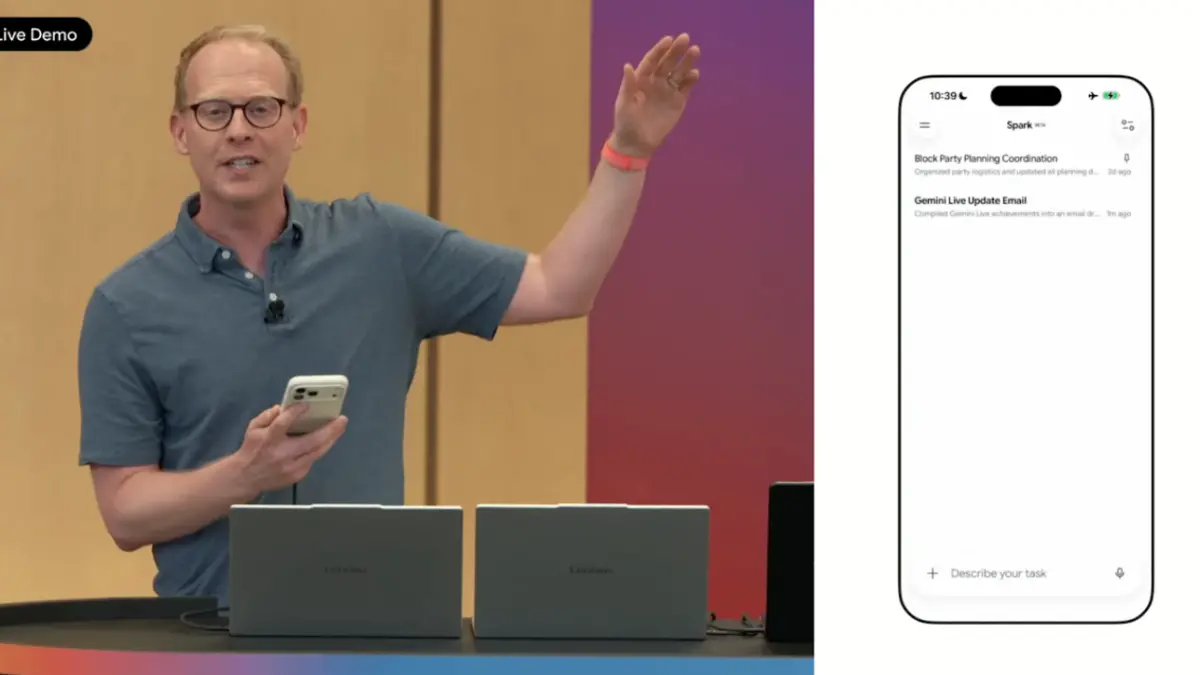
OpenClaw started a mini-revolution in the AI world by showing what was possible with AI agents. It demonstrated how an autonomous system could handle tasks like booking flights, ordering food, or managing emails. The tool quickly became a viral hit among tech enthusiasts, sparking a wave of interest in agentic AI. However, its reliance on local hardware—often a Mac Mini—created a barrier for mainstream adoption. At Google I/O 2026, the company finally unveiled its own answer: Gemini Spark, a cloud-based AI agent that could bring agentic AI to billions of users.
Cloud-Based Simplicity
One of the biggest differences between Gemini Spark and OpenClaw is the infrastructure. OpenClaw famously runs on a local device, meaning users must purchase a dedicated computer, set it up, and ensure it stays online. During the height of OpenClaw's popularity, Mac Minis sold out at retailers like Amazon, as early adopters scrambled to build their own agents. In contrast, Gemini Spark is a fully cloud-based agent. There is no hardware to buy, no complicated installation process, and no need to keep a machine running 24/7. Users simply subscribe to Google AI Ultra, and the agent works seamlessly across devices.
This cloud-first approach makes the agent far more accessible. When you close your laptop, Spark continues running in the background, handling tasks autonomously. It can run 24/7 without interruption, offering a level of persistence that local agents struggle to match. For everyday users who just want to delegate repetitive tasks, this is a game-changer.
Native Data Access
The second major advantage of Gemini Spark is its deep integration with Google's ecosystem. If you already use Gmail, Google Docs, or Google Drive, the agent has native access to your data. Imagine asking Spark to plan a dinner party: it can pull contacts from Gmail, find a recipe from a shared document, generate an invitation with artwork from Google Drive, and even check your calendar for available dates. All of this happens instantly, without the need for manual permission grants or third-party tools.
OpenClaw can achieve similar results, but it requires users to manually connect each service via APIs or permissions. For the average person, this process is daunting. Google's approach removes that friction entirely. The agent is built into Chrome and works on desktop, Android, and iOS, making it a natural extension of the services people already use. As Google CEO Sundar Pichai noted during the I/O keynote, the Gemini app already has 900 million monthly active users, providing a massive built-in audience for the new agent.
Cybersecurity Peace of Mind
Security has been a major concern for OpenClaw users. Because the agent runs on local hardware with high-level system access, any misconfiguration can lead to vulnerabilities. Early versions of the software faced criticism for its lack of robust security controls, though these have improved since the tool was acquired by Anthropic. Still, for the average user, trusting an open-source agent with email, bank accounts, and personal data is a leap of faith.
Gemini Spark, by contrast, benefits from Google's extensive cybersecurity infrastructure. The company has decades of experience protecting user data, from Gmail to Google Pay. To further prevent misuse, Google introduced the Agent Payments Protocol (AP2) at I/O. This protocol allows users to set strict limits on what Spark can spend, which merchants it can use, and what actions it can take. If the agent tries to make an unintended purchase, the protocol blocks it. This level of control is essential for building trust in agentic AI, especially when it involves financial transactions.
Beyond spending limits, Spark also uses Google's existing security features, such as two-factor authentication and advanced phishing protection. The agent's actions are logged and auditable, giving users full transparency. As AI agents become more powerful, these safeguards will be critical to preventing harmful outcomes.
Expanded Analysis: The Road to Mainstream Agentic AI
The success of OpenClaw proved that there is demand for AI agents, but it also revealed the hurdles they face. Most people are not comfortable setting up a dedicated computer or troubleshooting code. Google's strategy with Gemini Spark is to remove those barriers entirely. By making the agent cloud-based and deeply integrated with existing tools, the company can offer agentic AI to a much wider audience.
Another key factor is the underlying model. Spark runs on the newly announced Gemini 3.5 Flash, which promises faster inference and better contextual understanding than previous versions. Google claims this model is optimized for agentic tasks, allowing Spark to handle complex multi-step workflows without frequent errors. For instance, a user could ask Spark to research vacation options, compare prices, check reviews, and book a hotel—all in a single conversation.
The beta launch for AI Ultra subscribers gives Google a chance to refine the agent before rolling it out to everyone. Early testers will likely focus on reliability, speed, and safety. Because AI agents interact with real-world systems, a single mistake—like booking the wrong flight—could erode user trust. By starting with power users, Google can identify and fix these issues ahead of a broader release.
Comparisons to OpenClaw are inevitable, but the two products target different audiences. OpenClaw appeals to developers and tech enthusiasts who value control and customization. Gemini Spark appeals to everyday users who want simplicity and reliability. Both have a role to play in the evolving landscape of AI, but Spark's integration with Google's ecosystem could make it the first agent to achieve mass adoption.
In the coming months, the industry will watch closely to see how Gemini Spark performs in real-world scenarios. If it meets expectations, it could redefine how people interact with AI—moving beyond chatbots to truly autonomous helpers. For now, the beta is limited to AI Ultra subscribers, but if history is any guide, a wider release will follow once the kinks are ironed out.
The introduction of Agent Payments Protocol also sets a precedent for responsible AI spending. As agents gain access to financial tools, ensuring they act within user-defined boundaries is crucial. Google's approach may influence competitors to adopt similar safeguards, raising the bar for the entire industry.
Ultimately, Gemini Spark represents a significant step forward in making agentic AI accessible and trustworthy. While OpenClaw blazed the trail, Google's scale and expertise could bring these capabilities to the mainstream, changing how billions of people manage their digital lives.
Source: Mashable News