

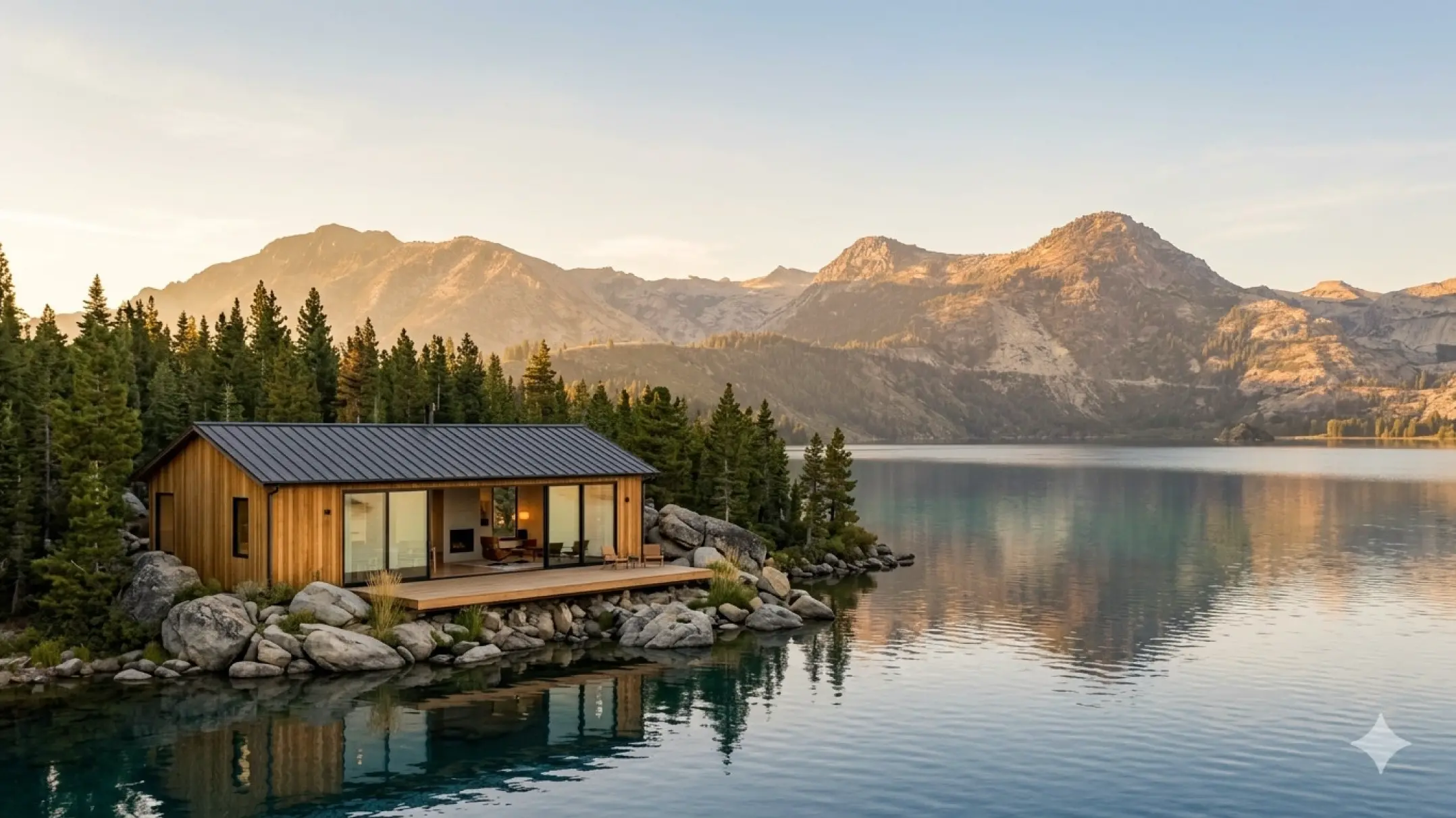
Google Earth users who were eager to experiment with AI-powered image generation will have to wait a bit longer. The company has announced that it is pausing its newly introduced Nano Banana 2 feature, which allowed users to transform real-world locations into imaginative, AI-generated landscapes. The decision comes less than 24 hours after the feature launched, marking one of the fastest reversals in the company's recent history.
In a statement shared on X, Google acknowledged the feature's potential while admitting that misuse had already occurred. The message read: "We know that people uniquely trust Google Earth for a reliable view of the world. We've seen geospatial professionals using this feature for a range of useful purposes, however we've also seen people sharing screenshots of generated imagery that appear to violate our policies. So we're rolling back this feature in Google Earth while we work on implementing stronger guardrails." The statement also noted that generated images did not appear in the main Google Earth experience for others to see and were watermarked as AI-generated.
The Rise and Rapid Fall of Nano Banana 2
Nano Banana 2 was introduced as the latest iteration of Google's Gemini-powered image generation technology. The announcement on July 30, 2026 positioned the feature as a creative extension of Google Earth, enabling users to take a satellite view of a familiar location and reimagine it with altered weather, seasons, or even fantastical elements like castles or forests. The goal was to lower the barrier for creative exploration while preserving the underlying geospatial accuracy that Google Earth is known for.
The feature was not integrated into the main Google Earth experience. Instead, it operated as an experimental layer that users could access separately. Generated images were automatically watermarked to indicate their AI origin, and they were not shared publicly within the platform. Despite these precautions, the company encountered problems almost immediately.
Google has not released specific details about the policy violations it discovered. However, the nature of AI image generation makes it easy to imagine potential issues. Users could have generated images that depicted real locations with added violence, hate symbols, or other offensive content. Others might have attempted to create realistic-looking images that could be mistaken for actual satellite photographs, potentially causing confusion or panic. There is also the possibility that some users tried to replicate the work of artists or photographers without permission, raising copyright concerns.
The rapid retreat suggests that the volume of problematic content was significant enough to trigger immediate action. Google's decision to press pause, rather than simply filter content after the fact, indicates a recognition that proactive measures are necessary when dealing with geospatial data.
Why Trust Is the Core Issue
The use of AI image generation in Google Earth touches on a sensitive issue: trust. Google Earth has long been regarded as a reliable tool for viewing the planet. Scientists, urban planners, environmentalists, and everyday users rely on its satellite imagery to study landscapes, monitor changes, and plan projects. The platform's credibility depends on the implicit guarantee that what you see is a truthful representation of the Earth.
Introducing a feature that allows users to generate entirely fictional versions of real locations creates a fundamental tension. Even with watermarks, there is a risk that generated images could be taken out of context and used to spread misinformation. For example, a user could create an image showing a city engulfed in flames or a coastal area destroyed by a hurricane, and share it on social media without the AI watermark visible in a screenshot. Such images could easily be mistaken for real satellite imagery, especially if they are technically convincing.
Google's statement specifically referenced the trust that people place in Google Earth, suggesting that the company is aware of this risk. By rolling back the feature, Google is signaling that the integrity of its geospatial platform takes precedence over short-term user engagement. This is a notable stance, especially given the competitive pressure to integrate AI capabilities into every product.
The Broader Context: AI Image Generation in Professional Tools
The controversy is not isolated to Google Earth. AI image generation has been a source of tension across many platforms, from social media to photo editing software. Tools like DALL-E, Midjourney, and Stable Diffusion have faced criticism for their potential to create misleading imagery, appropriate artistic styles, and generate harmful content. In response, many companies have implemented content filters, usage limits, and watermarking systems.
However, geospatial tools occupy a unique position. Unlike a generic image generator that creates scenes from text prompts, Google Earth works with specific geographic coordinates and real satellite data. This creates an even higher responsibility to prevent misuse, because the output resembles authentic geographic imagery. The feature could be used to fabricate evidence of environmental disasters, urban development, or military activity, with potentially serious consequences.
Professional users in fields like urban planning, architecture, and environmental science may have found legitimate uses for Nano Banana 2. For instance, an urban planner could generate realistic visualizations of how a proposed park might look in different seasons. A climatologist could simulate the effects of sea-level rise on a coastal area. These use cases are valuable, but they still carry inherent risks if the generated images are not clearly labeled.
Google has promised to reintroduce the feature after implementing stronger guardrails. While the company has not specified what those guardrails might look like, they could include more aggressive content filtering, region-specific restrictions, or a requirement that users explicitly confirm the AI-generated nature of the image before sharing it. It is also possible that Google will restrict the feature to certain geographic areas or limit the types of transformations that can be applied.
What's Next for Nano Banana 2?
At the time of writing, Google has not provided a timeline for the feature's return. The company's statement ended with a promise to "work on implementing stronger guardrails," but did not specify when that work might be complete. This lack of detail is common for features that are pulled for policy reasons, as Google typically prefers to make changes behind the scenes before announcing a relaunch.
In the meantime, users who were surprised by the rapid rollback are left to wonder what the stricter policies will look like. Some may once again be able to generate a cherry blossom version of their hometown or reimagine a desert landscape as a lush rainforest. But the experience is likely to be more constrained, with clearer warnings and potentially more stringent prompts.
The brief existence of Nano Banana 2 in Google Earth serves as a reminder that AI innovation often outpaces the safety measures needed to govern it. Even with thoughtful preparation, real-world usage can reveal vulnerabilities that internal testing misses. The speed with which Google shut down the feature indicates that the company is committed to avoiding the reputational damage that could result from unchecked misuse, even if that means disappointing eager early adopters.
Google's decision to pause Nano Banana 2 is a significant event in the ongoing evolution of AI technology. It underscores the importance of trust in established tools and the challenges of integrating generative features into platforms with a reputation for factual accuracy. As AI continues to advance, more companies will likely face similar dilemmas, forced to choose between innovation and integrity. For now, Google Earth remains what it has always been: a reliable window to the world, with its AI-powered imagination placed on an indefinite hold.
Source: Android Authority News