

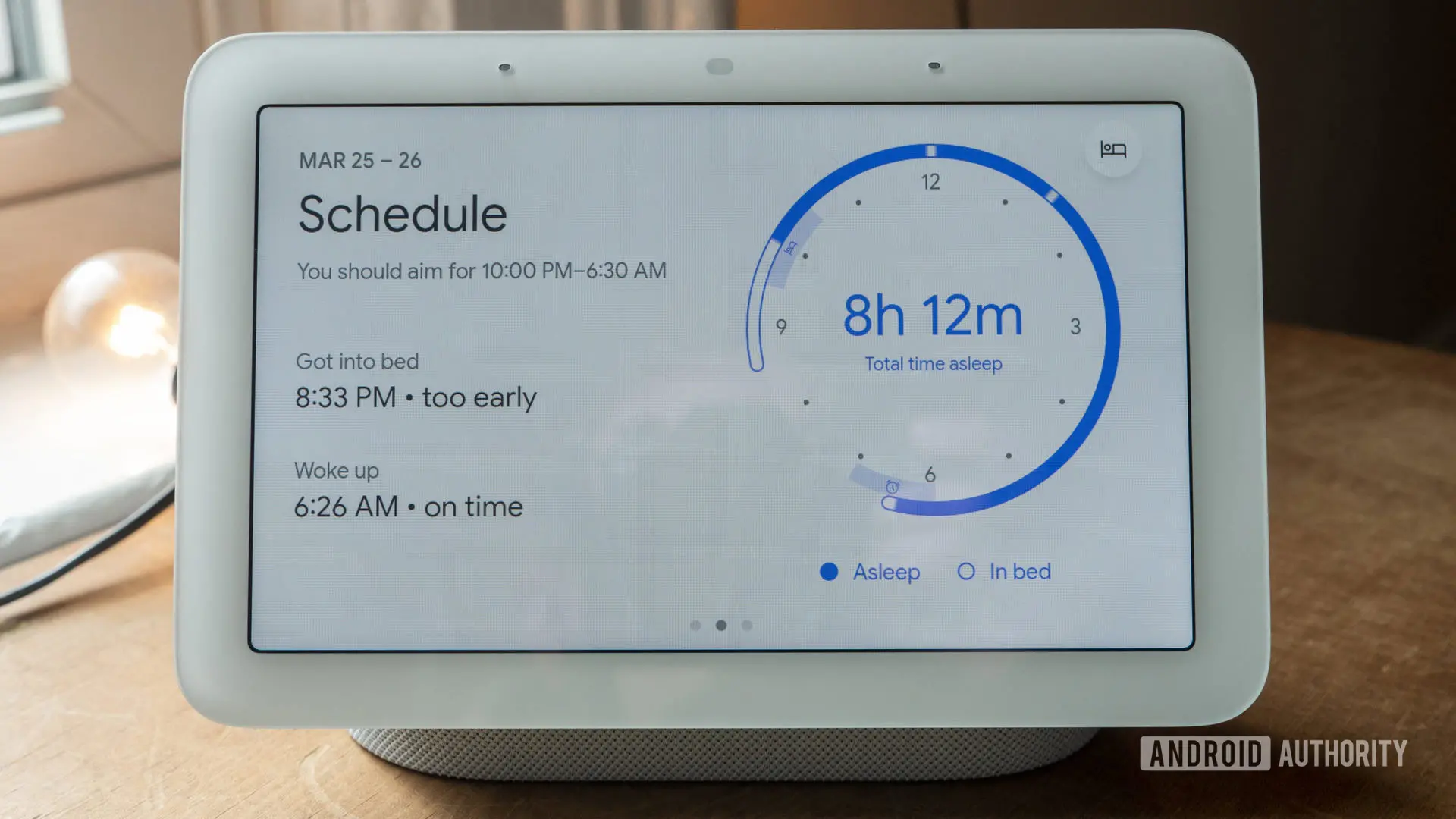
Google has spent much of this year consolidating its various fitness and health services into the new Google Health app. But one notable feature has remained tied to the outgoing Google Fit: the second-generation Nest Hub's Sleep Sensing. That appears to be changing, as recent code strings in the Google Home app suggest Google is preparing to migrate sleep tracking to Google Health.
A new home for sleep data
Spotted in version 4.23 of the Google Home app, updated text strings now explain “how your Nest Hub works with Google Health.” This wording largely replaces previous references to Google Fit, signaling that the smart display’s sleep data will eventually be handled by Google Health instead. The change is not live for everyone yet, but it represents the next step in Google’s plan to unify its health-related services under one umbrella.
The Nest Hub’s Sleep Sensing feature uses a Soli radar sensor to monitor movement and breathing while you sleep. It can produce detailed insights such as sleep stages, bedtime, and breathing rate. The device’s microphone can also detect coughing and snoring, while other sensors account for changes in light and room temperature. Google has emphasized that this data is processed locally on the device, which helps address privacy concerns.
How the integration would work
According to the new text, Google Health will track this information once the Nest Hub determines that you are in bed. It also notes that other services connected to Google Health may be able to access sound-event data, depending on your settings. This suggests that users will have some control over what is shared and with which services.
This move is part of a broader transition away from Google Fit. Google has already replaced the Fitbit app with Google Health and plans to let Google Fit users migrate their data later this year. By moving Nest Hub sleep tracking into Google Health, Google is taking another step toward creating a central hub for all health and wellness data.
Why this matters for Nest Hub owners
For people who use the Nest Hub in their bedroom, the transition to Google Health could mean a more seamless experience. Instead of opening a separate Google Fit app to view sleep data, they would find it directly within Google Health, alongside other health metrics like steps, heart rate, and activity from connected devices.
It could also enable deeper integrations with other Google services. As Google Health becomes the central repository for health data, it may allow third-party apps and services to access sleep information with user permission. This could lead to more personalized recommendations, integration with smart home routines, and improved health insights.
However, the transition also raises questions. Some users may be concerned about how their sleep data is stored, shared, and used. Google has said that Sleep Sensing data is processed on-device, but the new strings indicate that sound-event data could be accessible to other services connected to Google Health. This means users should review their privacy settings carefully when the change goes live.
Background: The rise of Google Health
Google Health is the tech giant’s ambitious effort to centralize health and wellness data. The app was designed to replace the aging Google Fit interface and to integrate more deeply with Fitbit, which Google acquired in 2021. Over the past year, Google has been migrating Fitbit users to the Google Health app, offering tools to import historical data and sync new measurements.
The Nest Hub Sleep Sensing feature was one of the few remaining services still tied to Google Fit. The new development suggests that Google is close to completing this migration. It also highlights the company’s broader strategy of using its hardware ecosystem to gather health data and provide actionable insights.
What’s next for Nest Hub and Google Health
As Google continues to roll out updates to the Google Home app and Google Health, users can expect to see the transition happen automatically. The new permissions and data-sharing options will likely appear in the Nest Hub settings menu. Google may also release an update to the Nest Hub’s firmware to enable the connection to Google Health.
It is also possible that future Nest Hub devices will rely more heavily on Google Health. The company has been investing in health-related hardware, and the Nest Hub’s Soli sensor is just one example. Future generations could include more advanced sensors for tracking additional health metrics.
How to prepare for the change
If you own a Nest Hub and use Sleep Sensing, there are a few steps you can take to prepare. First, make sure the Google Home app and the Nest Hub firmware are up to date. Second, check your Google Health app settings to understand what data is being collected and how it is shared.
You can also review the permissions for any third-party services connected to your Google account. If you do not want sound-event data shared with other services, adjust the settings accordingly. Google is expected to provide clear toggles and explanations when the update goes live.
For those who have been using Google Fit, now is a good time to prepare for the eventual migration. Google has promised tools to transfer historical data to Google Health. Keeping your data backed up and familiarizing yourself with the new app will make the transition smoother.
Privacy and security considerations
Privacy has always been a key concern with health tracking devices. The Nest Hub’s Sleep Sensing feature was designed with on-device processing to minimize cloud exposure. However, the new Google Health integration may change how data flows, especially if users opt to share data with connected services.
Google has stated that the data is processed locally on the device, but the new text mentions that sound-event data could be accessible to other services connected to Google Health. This implies a degree of cloud sync may be involved, depending on user settings. Google will likely offer granular controls to let users choose what to share.
Users should also be mindful that Google Health, like other health platforms, may be subject to regulatory requirements. In some regions, health data is protected by strict laws. Google has implemented security measures to safeguard this information, but no system is completely immune to breaches. It is always wise to use strong passwords and enable two-factor authentication.
The big picture: Google’s health ecosystem
The move to shift Nest Hub sleep tracking into Google Health is just one piece of a larger puzzle. Google is building a comprehensive health ecosystem that spans wearable devices, smart displays, and mobile apps. By consolidating data under Google Health, the company can offer a unified experience and potentially use artificial intelligence to provide deeper insights.
Competitors like Apple and Samsung have also been investing in health tracking. Apple Watch offers sleep stages and heart rate monitoring, while Samsung Health connects with Galaxy Watches and other devices. Google’s advantage lies in its integration with Fitbit and its wide array of smart home products.
The Nest Hub is uniquely positioned as a bedside device. It can track sleep without worn hardware, which is a significant convenience. By linking this data to Google Health, Google can combine sleep information with activity data from Fitbit, providing a more complete picture of a user’s health.
Potential impact on Fitbit users
Fitbit users who also own a Nest Hub will likely benefit from the integration. They will be able to see sleep data from both sources in one place. This could help them understand correlations between sleep and other health metrics, such as heart rate variability and activity levels.
The transition may also affect Fitbit Premium features. Google Health could eventually incorporate premium insights that were previously exclusive to Fitbit Premium. However, that is speculation at this point.
For now, the immediate change is that Nest Hub Sleep Sensing data will be routed to Google Health instead of Google Fit. This is a technical shift, but it could pave the way for more advanced features down the line.
What users are saying
Online communities have responded to the news with mixed reactions. Some users welcome the consolidation, saying it simplifies their health data management. Others are concerned about the gradual sunsetting of Google Fit, which they have used for years. A common sentiment is that Google should provide clear migration paths and not force users to adopt new apps without warning.
The fact that Google is leaving Google Fit behind is not surprising. The company has been signaling this move for months. The new Nest Hub integration is another sign that Google Fit’s days are numbered.
It is also worth noting that the Google Home app strings were discovered just days before Google I/O, the company’s annual developer conference. It is possible that Google will make an official announcement about Nest Hub sleep tracking and Google Health during the event.
How to access Google Health
Google Health is available on Android and iOS devices. If you do not have it installed, you can download it from the Google Play Store or Apple App Store. The app requires a Google account to sync data.
Once the Nest Hub integration is live, you will likely see a new section in the Google Health app for sleep data. The app may also prompt you to connect your Nest Hub and manage permissions.
Google has not provided a specific timeline for the change, but the appearance of the strings suggests it is imminent. Users should monitor the Google Home app for updates and be prepared for a prompt to set up the new data sharing.
In the meantime, Nest Hub Sleep Sensing will continue to work as it has before. The transition to Google Health should be seamless, with historical sleep data being carried over or made available for migration.
The future of Google Health looks promising, and the addition of Nest Hub sleep tracking brings it one step closer to becoming the default health platform for Google users.
Source: Android Authority News