

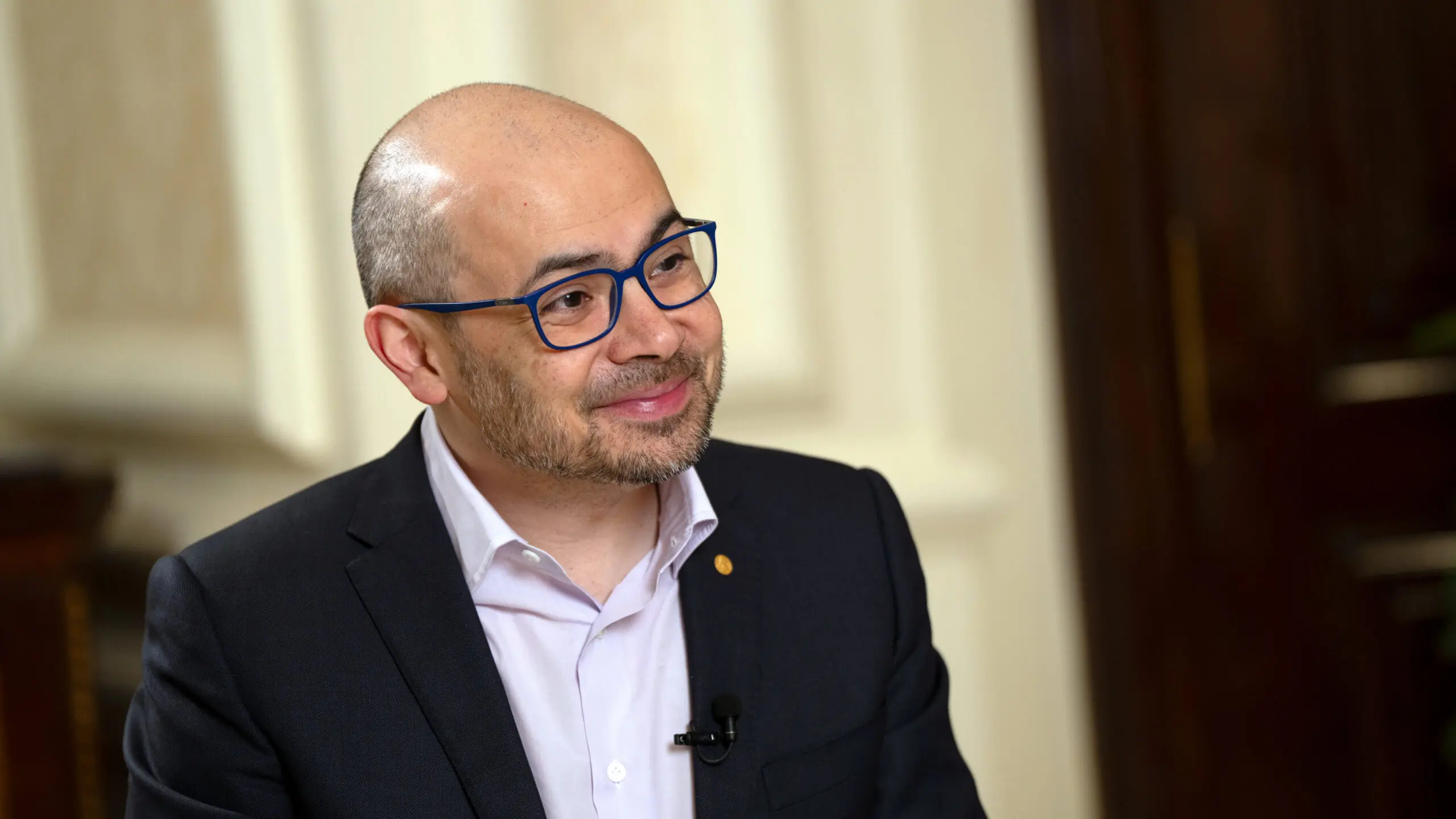
Google has long positioned itself as a leader in artificial intelligence, but a series of high-level departures and a leadership transition at DeepMind are raising questions about the company’s ability to maintain its edge. The most significant change involves Demis Hassabis, the co-founder of DeepMind, who is stepping aside from the day-to-day running of the lab to take on a new role as chief scientist at Alphabet. The move, announced in an internal memo, marks a turning point for the lab that has been at the heart of Google’s AI ambitions since it was acquired in 2014.
Hassabis, a former chess prodigy and video game designer, founded DeepMind in 2010 with the goal of creating artificial general intelligence, or AGI. Under his leadership, DeepMind achieved a series of breakthroughs, most notably AlphaGo, which stunned the world by defeating a top human Go player in 2016, and AlphaFold, which solved the long-standing protein-folding problem and earned Hassabis a share of the Nobel Prize in Chemistry in 2024. In recent years, DeepMind has also become the engine behind Google’s Gemini family of large language models, the company’s primary answer to OpenAI’s GPT systems.
In his memo announcing the leadership change, Hassabis again framed his work in the context of AGI, which he has long predicted is imminent. “I’ve been working towards AGI my whole life and now, like many of you, I feel it is close at hand,” he wrote. According to Hassabis, the new role will allow him to focus on the “big picture” challenges that arise as AI systems become more powerful. He will remain in charge of Isomorphic Labs, Alphabet’s drug discovery venture, and will also serve as chair of DeepMind, ensuring he retains a hand in the lab’s strategic direction.
Taking over the day-to-day operations of DeepMind is Koray Kavukcuoglu, a longtime DeepMind researcher who has served as its vice president of research. Kavukcuoglu will now hold the title of senior vice president at Google, reporting directly to CEO Sundar Pichai. His promotion reflects a desire for continuity, but it comes at a time when DeepMind is losing several of its most prominent scientists. Four key researchers — Quoc Le, Oriol Vinyals, Jeff Dean, and Sanjay Ghemawat — have announced that they are leaving Google to found a new startup called Discovery Loop. The company’s stated mission is to use artificial intelligence to automate scientific discovery, a goal that aligns closely with the research themes all four pursued during their time at Google.
The departure of Jeff Dean, in particular, is a significant blow. Dean, who was Google’s 30th employee, is widely regarded as one of the most influential engineers in the company’s history. He joined Google in 1999 and played a foundational role in building the systems that made Google Search the world’s dominant information indexing platform. Over the years, he contributed to MapReduce, BigTable, TensorFlow, and countless other projects that underpin both Google’s products and the broader field of machine learning. Inside the company, his reputation has taken on an almost mythological quality, with a popular GitHub repository listing humorous “Jeff Dean facts” that celebrate his outsized impact.
More recently, Dean and Oriol Vinyals were instrumental in designing Gemini, Google’s flagship AI model family. Vinyals, a former DeepMind researcher, was one of the lead architects of the Transformer architecture, the breakthrough technology that powers virtually all modern generative AI systems. Quoc Le, meanwhile, is known for pioneering work in deep learning and had a hand in developing the sequence-to-sequence models that led to large language models. Sanjay Ghemawat, a long-time Google distinguished engineer, co-created many of the core infrastructure tools that made it possible to train and deploy AI at massive scale. Together, the four represent a concentration of technical expertise that will be difficult for Google to replace.
The announcement of Discovery Loop comes just a few months after another wave of high-profile exits from Google’s AI ranks. Noam Shazeer, one of Google’s most celebrated researchers, left earlier in the summer to join OpenAI. Shazeer was the lead author of the seminal 2017 paper “Attention Is All You Need,” which introduced the Transformer architecture and set the stage for the generative AI boom. His departure to OpenAI, Google’s chief rival, was widely seen as a coup for the OpenAI team.
Around the same time, DeepMind vice president John Jumper, who shared the Nobel Prize with Hassabis for his work on AlphaFold, left to join Anthropic, another leading AI company. Jumper was soon followed by senior DeepMind researchers Jonas Adler and Alexander Pritzel, both of whom were reportedly key to getting Gemini off the ground. These moves have left Google’s AI leadership thinner and have raised concerns about morale within DeepMind, which has traditionally prided itself on attracting and retaining top research talent.
The personnel changes come against a backdrop of intensifying competition and unmistakable signs that Google’s forward momentum has slowed. At the company’s I/O developer conference in the spring, executives pledged that Gemini 3.5 Pro, its next frontier model, would arrive in June. That deadline has come and gone, with no flagship release in sight. Instead, Google has shipped only lower-powered “Flash” models, leading some observers to speculate that the company is struggling to keep pace with OpenAI and Anthropic, both of which have released new models in recent months that have impressed researchers and consumers alike.
OpenAI and Anthropic have not only matched Google on technical performance but have also matched its ambitions. OpenAI’s newest models can reason through complex problems and even take actions on a user’s behalf, while Anthropic has made safety a hallmark of its systems. Google, for its part, still possesses enormous advantages, including deep pockets, world-class compute infrastructure, and an unrivaled distribution network through its search engine, Android platform, and cloud business. But the exodus of key talent risks eroding those advantages over time.
Sundar Pichai, Google’s CEO, sought to reassure employees and investors with a statement that emphasized the company’s strengths. “We’ve got amazing talent, world-class compute, and products that bring AI to more people than any other company,” he said. Pichai also reportedly met multiple times with the departing researchers, particularly Dean and Ghemawat, in an effort to persuade them to stay. Those efforts ultimately failed, according to a report in Wired, which detailed the founders’ decision to move forward with their plans.
Discovery Loop is being structured as a public benefit corporation, a legal designation that requires the company to consider the public good as well as profit. Both OpenAI and Anthropic use the same structure, though critics have noted that such designations offer little concrete accountability. What distinguishes Discovery Loop is the founders’ stated ambition to apply AI not to chatbots or consumer products but to the manual process of scientific research — a domain where AI is only beginning to show its potential. If anyone can make that vision a reality, the talent assembled in the new venture suggests it has a fighting chance.
For Google, the challenge is to convince the world that it can still lead the AI race with a shrinking list of founding luminaries. The company has weathered leadership transitions before, and its research bench remains deep, with thousands of skilled engineers and scientists. Yet the departure of figures like Jeff Dean — who has been described as the soul of Google’s engineering culture — is more than a symbolic loss. It reflects a broader shift in the AI landscape, where the most ambitious researchers increasingly prefer to build new laboratories rather than work within a corporate giant. Hassabis’s move to Alphabet may provide him with more strategic influence, but it also signals that even he is no longer steering the ship on a daily basis. As the race toward AGI intensifies, the question is whether Google’s structure can hold together or whether its brightest minds will continue to scatter to startups and rivals.
Source: Ars Technica News