

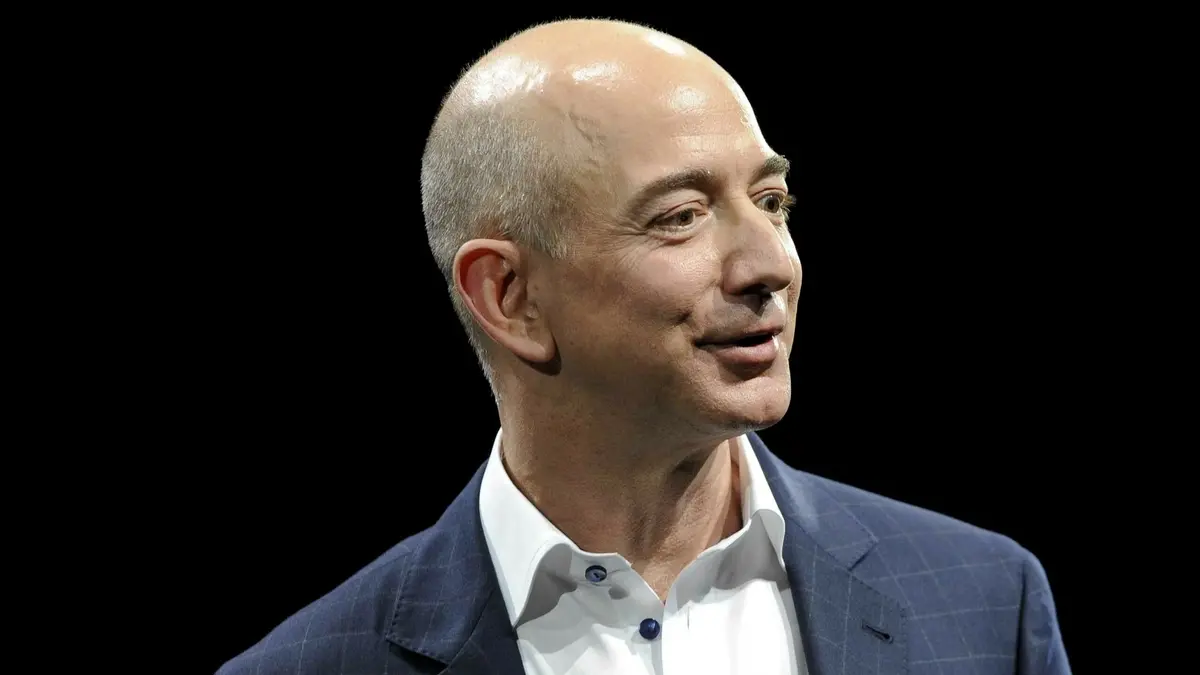
At the VivaTech 2026 conference in Paris, Amazon founder and billionaire entrepreneur Jeff Bezos delivered a strikingly optimistic vision for the future of work in the age of artificial intelligence. Contrary to widespread fears that AI will eliminate millions of jobs, Bezos argued that the technology will actually create a severe labor shortage. According to him, AI will unlock human creativity on an unprecedented scale, turning countless ideas into tangible projects and thereby generating a massive demand for skilled workers to bring those projects to life.
The Logic Behind the Prediction
Bezos's reasoning is grounded in a fundamental observation: the current bottleneck in innovation is not a lack of ideas, but the limitations of tools and production capacity. Many potentially brilliant products or business concepts never see the light of day because they are too complex, too expensive, or too time-consuming to realize. Artificial intelligence, Bezos claims, will shatter this barrier by dramatically accelerating the loop between imagining and building. With AI handling complex simulations, design iterations, and manufacturing optimization, the ability to turn a concept into a prototype—and eventually into a finished product—will increase exponentially.
This acceleration will not only shorten development cycles but also open up entirely new fields of activity. Bezos envisions a future where the only real constraint is human imagination. Consequently, a vast number of engineers, creators, technicians, and project managers will be needed to manage and operate this new wave of innovation. Instead of a surplus of labor, we will face a deficit. This runs counter to the dominant narrative of job destruction, a narrative that has dominated headlines and fueled public anxiety.
Background and Context of Bezos's Optimism
Jeff Bezos has always been a proponent of long-term thinking and technological optimism. As the founder of Amazon, he revolutionized e-commerce, cloud computing, and logistics. Under his leadership, Amazon heavily invested in automation, including robotics in warehouses and AI-driven recommendation systems. Yet Bezos has consistently argued that technology creates more jobs than it destroys. For instance, during Amazon's early expansion, critics warned that online retail would decimate brick-and-mortar stores. While some displacement occurred, Amazon itself created hundreds of thousands of jobs, including many in new categories such as cloud infrastructure engineers, data scientists, and logistics specialists.
Bezos's stance also reflects his experience with Blue Origin, his aerospace company. Blue Origin employs thousands of engineers and technicians working on reusable rockets and space exploration. These complex physical systems require highly skilled labor, and Bezos sees AI as a tool to augment rather than replace those workers. His new startup, Prometheus, is a direct embodiment of this vision.
Prometheus: A $12 Billion Bet on Physical AI
Prometheus, Bezos's latest venture, has already raised $12 billion in funding. The startup's mission is to develop AI tools that help engineers invent and produce physical goods more rapidly. Unlike mainstream AI companies that focus on large language models (LLMs) and text generation, Prometheus aims to create specialized AI systems that understand physics, materials science, and manufacturing processes. For example, designing a rocket engine or a new type of battery requires deep knowledge of thermodynamics, fluid dynamics, and structural integrity—knowledge that cannot be gleaned from internet text alone. Prometheus intends to train AI on real-world data from simulations, experiments, and production lines to assist engineers in solving complex problems.
This approach could revolutionize industries ranging from aerospace to automotive to consumer electronics. By reducing the time and cost of prototyping, companies can iterate faster and bring more innovative products to market. However, this will also create a need for more engineers who can work alongside AI systems, interpret their suggestions, and make final decisions. Bezos believes that the demand for such talent will outstrip supply, leading to a competitive labor market.
Counterpoints and Criticisms
While Bezos's vision is compelling to many, it has also drawn skepticism. Critics argue that such optimism is typical of billionaires who are insulated from the immediate impacts of automation. A recent Reuters/Ipsos poll showed that nearly half of Americans fear AI will harm their jobs. The disconnect between Bezos's perspective and public anxiety is stark. Moreover, the historical precedent of technological disruption suggests that while new jobs emerge, they are not always in the same locations or for the same people. The transition can be painful, requiring significant retraining and social safety nets.
Economists have noted that AI could exacerbate inequality if the benefits accrue to those who own the technology and have the capital to invest in it. Bezos himself is worth an estimated $250 billion, and his new venture is backed by enormous resources. This raises questions about whether the promised labor shortage will be equally distributed, or whether it will favor a small elite of highly skilled professionals while leaving others behind. Furthermore, the 12 billion dollars invested in Prometheus could have been used for other social purposes, highlighting the concentration of wealth and decision-making power in the hands of a few tech titans.
Historical Parallels and Future Scenarios
Bezos's argument echoes earlier technological revolutions. The advent of personal computers, the internet, and even the steam engine initially provoked fears of mass unemployment, yet each ultimately created new industries and job categories. For example, the rise of the internet in the 1990s led to the creation of millions of jobs in web development, digital marketing, e-commerce, and cybersecurity—roles that did not exist before. Similarly, the diffusion of AI may produce unforeseen occupations such as AI ethicists, prompt engineers, robotic supervisors, and synthetic data specialists.
However, the pace of change is faster than in previous eras. AI capabilities are doubling every few months, and the breadth of tasks that can be automated is expanding rapidly. Unlike earlier technologies that primarily affected manual or routine cognitive tasks, AI is now encroaching on creative and analytical domains. This makes the prediction of a labor shortage both plausible and precarious. If AI can soon outperform humans in many cognitive tasks, the demand for human labor could actually decrease, especially for roles that involve analysis and creativity. Bezos counters that AI will augment rather than replace, but the line between augmentation and replacement is blurry.
The Role of VivaTech and European Reactions
VivaTech is one of Europe's largest technology conferences, held annually in Paris. It attracts entrepreneurs, investors, and thought leaders from around the world. Bezos's appearance there signals the importance of the European market for AI development. European regulators have been more cautious than their American counterparts, enacting the AI Act to ensure ethical and safe deployment. Bezos's optimistic message may resonate with European startups eager to adopt AI without fear of job losses. Yet many in Europe are wary of American tech dominance and the potential for job displacement in industries like manufacturing and services.
In his talk, Bezos emphasized that the key to harnessing AI's potential lies in education and workforce development. He called for governments and companies to invest heavily in retraining programs, STEM education, and lifelong learning. Without such investments, the labor shortage he predicts could become a mismatch: too many workers without the right skills, and too few jobs for those who cannot adapt. This is a crucial nuance that is often glossed over in his sweeping statements.
Implications for Business and Policy
Businesses must prepare for a future where AI is a core part of operations. This means not only adopting AI tools but also rethinking organizational structures, job designs, and talent management. Companies that fail to invest in their workforce risk falling behind in the race for talent. On the policy side, governments need to create conditions that encourage innovation while protecting workers. This includes updating social safety nets, promoting portable benefits, and fostering a culture of lifelong learning. Bezos's predictions, if correct, would require massive coordination between public and private sectors to ensure that the labor shortage is filled by willing and capable workers.
In conclusion, Jeff Bezos's vision at VivaTech 2026 is a provocative departure from the dominant narrative of AI-induced job apocalypse. By highlighting the potential for AI to unlock creativity and drive a new wave of innovation, he challenges us to think differently about the relationship between technology and employment. Whether his optimistic scenario materializes depends on many factors, including the pace of AI development, the adaptability of the workforce, and the choices made by policymakers and business leaders. What is clear is that the debate over AI and work is far from over, and voices like Bezos's ensure that it remains dynamic and contested.
Source: Génération NT News