

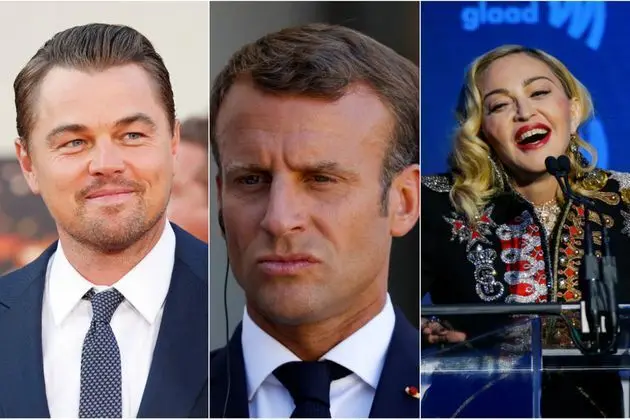
The 2019 Amazon rainforest fires captured global attention, prompting an outpouring of concern from celebrities, politicians, and the public. Social media platforms were flooded with dramatic images of burning forests, as users sought to raise awareness and pressure world leaders into action. However, a closer examination revealed that many of these widely shared photos were either outdated or completely unrelated to the Amazon fires, inadvertently contributing to a wave of misinformation that undermined the very cause they aimed to support.
Among the most notable figures who shared such images was French President Emmanuel Macron. In a tweet on August 22, 2019, Macron wrote, "Our house is burning. Literally. The Amazon, the lung of our planet which produces 20% of our oxygen, is on fire. This is an international crisis. G7 members, meet in two days to talk about this emergency." The tweet included a striking photo of a forest fire. However, reverse image searches revealed that the photo was taken by American photographer Loren McIntyre, known for his work with National Geographic, who died in 2003. While the exact year of the photograph is uncertain, it is at least 16 years old. This meant Macron was using an old image to illustrate a current crisis, misleading his millions of followers about the actual state of the fires.
Macron was not alone. Pop icon Madonna shared a photo of burning trees on Instagram, captioned with urgent calls to action. But that image was later identified as a stock photo from a fire in a different region, not the Amazon. Similarly, Ricky Martin, Cristiano Ronaldo, and Novak Djokovic posted pictures that were either years old or from other locations. Leonardo DiCaprio, a prominent environmental activist, also shared an image that turned out to be from an older fire. These instances highlight a troubling trend: in the rush to show solidarity and raise awareness, many high-profile individuals failed to verify the authenticity of the content they were disseminating.
The consequences of such misinformation are significant. For one, it can distort public understanding of the crisis. The actual Amazon fires in 2019 were severe: according to Brazil's National Institute for Space Research (INPE), 75,336 forest fires were recorded from January to August 21, an 84% increase over the same period in 2018. Of these, 54% were in the Amazon region. These were real and devastating fires, but using old or unrelated images makes it harder for the public to grasp the true scale and urgency of the situation. It also provides ammunition to skeptics and those who seek to downplay climate change and deforestation.
Furthermore, the sharing of misinformation can undermine the credibility of the activists involved. Brazilian President Jair Bolsonaro, who had been criticized for his environmental policies, quickly seized on the inaccuracies. In response to Macron's tweet, Bolsonaro accused the French leader of having a "colonialist mentality," deflecting attention from the actual issues. This kind of backlash can polarize the debate and hinder international cooperation.
The phenomenon extends beyond the Amazon fires. In the age of social media, viral misinformation has become a recurring problem in environmental and humanitarian crises. From the Syrian war to natural disasters, outdated or misattributed images frequently circulate, often with good intentions but harmful effects. Fact-checking organizations have repeatedly warned that even well-meaning sharing can have negative consequences.
To understand the context better, it is important to examine the broader issue of misinformation in environmental activism. The Amazon rainforest plays a critical role in global climate regulation, often called the "lungs of the Earth" for its ability to absorb carbon dioxide and produce oxygen. Deforestation and fires in the Amazon have been exacerbated by government policies under Bolsonaro, who has encouraged agricultural expansion and mining in the region. Environmental groups and scientists have documented a sharp increase in deforestation and fires since he took office in January 2019.
The 2019 fires were not unprecedented, but they attracted international attention due to their intensity and the political climate. The G7 summit in Biarritz, France, that August included discussions on the Amazon, and Macron pledged $20 million in aid. However, the controversy over the photo temporarily overshadowed the substantive issues. It also highlighted the challenges of using social media as a tool for advocacy. While celebrities can bring massive visibility to causes, they also bear a responsibility to ensure the accuracy of their messages.
Other celebrities also fell into the same trap. Actor and singer Ricky Martin posted an image of a fire that was later found to be from a forest fire in California. Cristiano Ronaldo shared a photo that was actually from a fire in Portugal. Novak Djokovic posted an image that turned out to be from 2013. Even Leonardo DiCaprio, who has a foundation dedicated to environmental causes, shared an image that was not from the current fires. These errors, while perhaps unintentional, demonstrate how easy it is to spread misinformation when verification is overlooked.
The impact of these missteps can be measured in both public perception and policy. A study by the Reuters Institute for the Study of Journalism found that misinformation about the Amazon fires was widespread, with many people believing false claims about the fires' cause or extent. This confusion can lead to public apathy or misdirected anger. For example, some critics argued that Macron's use of an old photo was an attempt to manipulate public opinion against Bolsonaro, fueling nationalist sentiment in Brazil.
Moreover, the incident underscores the need for media literacy and responsible sharing. Social media platforms have since taken steps to label or remove misleading content, but the burden also falls on users, especially influential ones. Celebrities and politicians should consider partnering with fact-checkers or using verified images from reputable sources such as NASA or INPE. Some environmental organizations have called for a "pause and verify" approach before sharing.
The Amazon fires of 2019 were a genuine crisis, but they also became a case study in how good intentions can lead to unintended consequences. The spectacle of well-meaning celebrities sharing inaccurate images distracted from the real story: the urgent deforestation and the fight for the rainforest's survival. It also provided a lesson for future advocacy: the power of a viral image must be balanced with accuracy to maintain credibility and effectiveness.
As climate change accelerates, such moments of misinformation are likely to recur. The public must be equipped to identify reliable sources and to question even trusted voices. Environmental activists, in turn, must double-check their facts before hitting share. The Amazon is still burning, and the need for accurate information has never been greater.
Source: Yahoo News News