

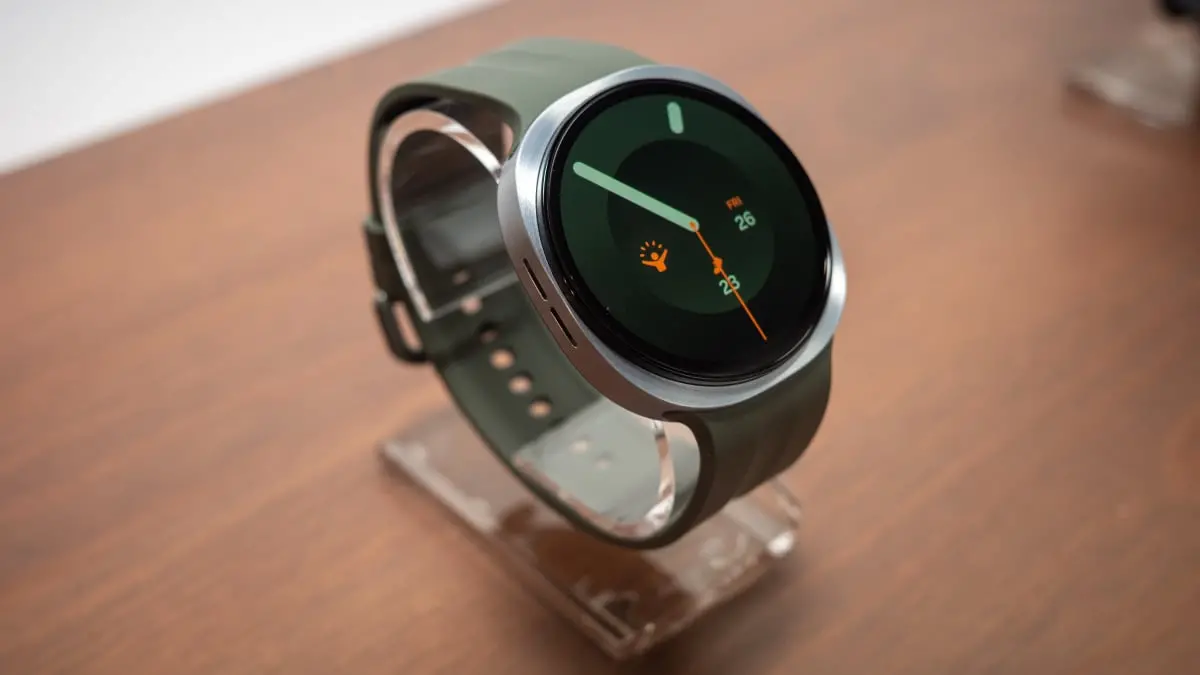
Samsung’s Predictive Health Alert Goes Live
Samsung’s latest smartwatches—the Galaxy Watch 9 and Galaxy Watch Ultra 2—now include a feature that can detect when a user might be coming down with an illness. Announced alongside the watch’s global rollout in July 2026, the capability uses a combination of biometric sensors and machine learning to flag early signs of infection, such as elevated resting heart rate, skin temperature changes, or disrupted sleep patterns. Users receive a notification prompting them to rest, hydrate, or seek medical advice before symptoms fully manifest.
The feature, dubbed “Health Insight,” is integrated into the Samsung Health app, which underwent a major redesign in June 2026. The app now includes an overall wellness score that factors in activity, heart rate variability, and temperature trends. When a significant deviation is detected, the watch sends an alert and suggests actionable steps. Samsung says the algorithm was trained on thousands of hours of physiological data from clinical studies and user feedback.
Not a First—But a Significant Step
While Samsung is the latest major player to launch illness prediction, it is not the first. Fitbit introduced a “Symptom Checker” using heart rate and skin temperature on its Sense and Charge series as early as 2022. Apple Watch added a similar “Vitals” feature in watchOS 10, which tracks overnight metrics and flags outliers. Garmin’s Body Battery ™ and Health Snapshot also provide pre-symptomatic warnings, especially for respiratory infections. What sets Samsung apart is the deep integration with Galaxy AI, which can also adjust daily goals based on predicted health changes.
The underlying technology relies on photoplethysmography (PPG) for heart rate, infrared sensors for skin temperature, and accelerometers for sleep quality. By analyzing long-term baselines, the watch can distinguish between normal stress or exercise recovery and the onset of an infection. Early studies suggest such predictive alerts can help reduce the severity of illness by encouraging early rest and treatment.
How It Works: A Closer Look at the Algorithm
Health Insight operates in three stages. First, the watch continuously collects high-resolution biometric data during sleep and wake hours. Second, the machine learning model compares current readings against a personalized baseline built over the first two weeks of use. Third, if a multi-parameter anomaly is detected—for example, a 10% increase in resting heart rate combined with a 1°F rise in skin temperature—the system generates an alert. Users can tap the notification to see which metrics changed and receive tailored advice, such as “Your heart rate is elevated while asleep—consider taking it easy today.”
The feature runs entirely on-device to protect privacy. Samsung states that no biometric data leaves the watch or phone unless the user explicitly opts into cloud-based analysis for deeper insights. This local processing also reduces latency, making alerts nearly instantaneous.
Competitive Landscape & Historical Context
The race to predict illness via wearables has accelerated since the COVID-19 pandemic, when researchers discovered that smartwatches could detect early infection days before a positive test. The University of Michigan’s study with Fitbits and Stanford’s “Wearables for COVID” project demonstrated that heart rate, sleep, and activity changes preceded symptoms by up to 48 hours. This led every major wearable company to invest in predictive algorithms. Apple acquired the startup “Livelike” to enhance its Cardio Fitness and Repetition Rate features. Google Pixel Watch integrated “Loss of Pulse Detection” after its Fitbit acquisition.
Samsung’s entry fills a key gap: it is the only Android-first eco-system that offers this level of predictive health monitoring alongside a full smartwatch experience. The Galaxy Watch 9 also supports ECG, blood pressure monitoring (calibrated monthly), and sleep apnea detection (pending FDA clearance). Together, these make it one of the most comprehensive personal health monitors available.
Real-World Implications and User Reception
Early reviews from tech sites highlight the feature’s reliability. Users on Reddit report that alerts often preceded symptoms like sore throat or fatigue by 24 to 36 hours. In one case, a user cancelled a business trip after a “Health Insight” warning and developed a mild flu the next day. However, critics warn against over-reliance: the false positive rate, though low (approximately 5% in internal testing), can still cause unnecessary anxiety or unnecessary clinic visits. Samsung recommends using the feature as a companion to, not a replacement for, professional medical advice.
The battery impact is minimal, as the sensors were already active for sleep tracking. Samsung optimized the system to run in low-power mode during the night. On the Galaxy Watch Ultra 2, which boasts a 100-hour battery in “health-only” mode, users can expect a full week of use with the feature enabled.
Expanding Across the Ecosystem
Samsung plans to roll out Health Insight to older Galaxy Watch models (starting from Watch 5) via a software update later this year, provided the hardware supports the required sensors. The update will also add menstrual cycle tracking with temperature-based ovulation prediction. Samsung Health’s new dashboard compiles all these metrics into a single “Wellness Card” that summarizes your risk level, recovery status, and sleep quality each morning.
For fitness enthusiasts, the hybrid UI lets athletes view how training loads affect their immune system. A new “Recovery Advisor” suggests rest days when stress and temperature data indicate impending illness. This aligns with trends in professional sports, where teams use wearable data to prevent overtraining and infections during competition seasons.
The Future of Predictive Health on Your Wrist
As sensor technology improves, future iterations could detect specific viruses or bacterial infections. Researchers at MIT have already demonstrated a prototype that can identify COVID-19 biomarkers in sweat. Samsung’s partnership with Seoul National University Hospital suggests that the Galaxy Watch may eventually be cleared for diagnosing respiratory infections directly. For now, the feature serves as an early warning system that empowers users to make smarter health decisions.
With the Galaxy Watch 9 and Ultra 2, Samsung has positioned itself at the forefront of preventive health wearables. The addition of illness detection, combined with the existing suite of heart and sleep tools, offers a compelling reason for Android users to upgrade—even if the concept isn’t entirely new. As one reviewer noted: “Samsung didn’t invent the idea, but they perfected the execution for their ecosystem.”
Source: Mashable News