

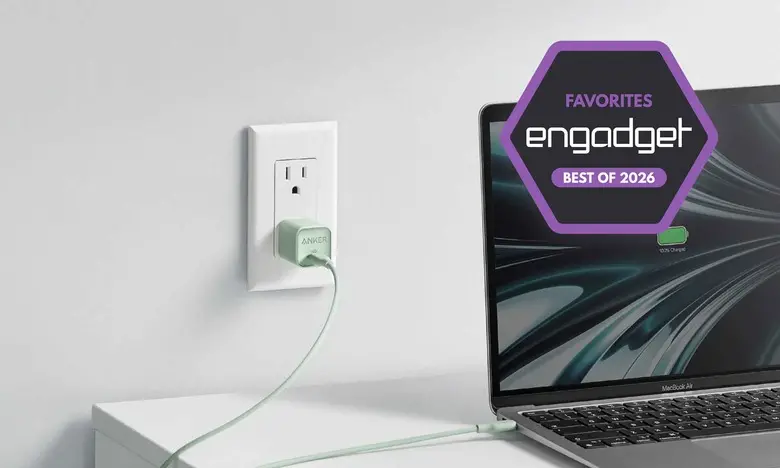
Fast chargers have moved beyond being simply convenient extras. With phones, tablets, laptops, earbuds, smartwatches, and other wearables all competing for limited wall outlets, the right power adapter can greatly change how quickly you get back to full power. A good fast charger also needs to manage heat safely and help protect long-term battery health. Because many modern devices now ship without a power brick in the box, choosing a charger with the right compatibility, port layout, and charging protocols is just as important as raw wattage.
The best fast chargers of 2026 are designed to handle multiple devices at once. Some users need to charge a phone, a laptop, and a pair of wireless earbuds from a single wall outlet. Others need a compact USB-C adapter that can slip into a travel bag without adding much bulk. Many popular models combine USB-C ports with a traditional USB-A port to support older cables or accessories. Newer multi-port adapters also add intelligent power distribution, meaning the charger can automatically rebalance wattage between your laptop and phone as both devices reach different charge levels.
Best fast chargers for 2026
There are several standout categories of fast chargers this year. Compact single-port adapters are ideal for phones and small accessories, offering 30W to 45W of power in a tiny package. Dual-port wall chargers are useful for charging a phone and earbuds at the same time. Travel-friendly chargers often include foldable prongs and interchangeable plugs for international use. Desktop chargers, meanwhile, can provide 100W or more across multiple USB-C ports, making them a great substitute for a laptop power brick and an excellent way to power a phone, tablet, and other devices from one central station.
Brands such as Anker, Ugreen, Belkin, and Baseus continue to refine their charger designs with gallium nitride technology. Compact GaN adapters have made it possible to shrink high-wattage charging hardware into cases that are barely larger than a standard phone charger. A small Anker charger with 67W or 100W of output can easily fit in a backpack pocket, yet still deliver enough power for a wide range of USB-C laptops. The key is matching the charger to the devices you actually own and the situations in which you will use them.
What to consider before buying a fast charger
Before shopping for a charger, you should determine three things: how many devices need to be charged at the same time, how much power those devices require, and whether you plan to travel with the charger. This is especially important when you have a mix of devices, including older gadgets that rely on Lightning cables or proprietary connections alongside newer USB-C equipment.
If you only need to charge one device, a lower-wattage charger with one port is usually cheaper, smaller, and simpler. Buying a 100W multi-port charger for a single smartphone is often unnecessary, although it can be useful if you plan to keep the charger for years and expect to add more devices. If you frequently travel with a phone, laptop, and wireless earbuds, a 65W dual-port or 100W three-port charger can provide enough flexibility without making you carry several separate power bricks.
Wattage is another crucial factor. Most manufacturers list the maximum charging speed for their devices in the technical specifications. For example, an iPhone typically charges at up to 25W with a compatible USB-C power adapter, while many Android phones accept 45W, 65W, or even 100W through their native charging standard. Laptops are different again. A thin-and-light Ultrabook often needs only 30W to 45W, but a powerful gaming laptop or mobile workstation may demand 140W or more. If your laptop uses a proprietary barrel connector instead of USB-C, it might be incompatible with universal chargers altogether, or it may support USB-C charging as a secondary option at reduced speeds.
Understanding how watts, volts, and amps work can also help you make a smarter purchase. A charger's total wattage is the product of voltage and current. For example, 20 volts at 5 amps equals 100 watts. The charger must support the right voltage and current profile for the device to negotiate the best possible charging speed. Most modern fast chargers use USB Power Delivery, or USB PD, to communicate with the connected device and adjust the output safely.
Why GaN chargers are different
Gallium nitride, or GaN, is a semiconductor material that has replaced the older silicon components in many modern chargers. GaN allows power adapters to operate at greater efficiency, generate less excess heat, and support higher wattage levels in a smaller physical space. In practice, a GaN charger can be 30 to 50 percent smaller and lighter than a silicon-based adapter with the same output. For frequent travelers, this means a 65W charger can be nearly the same size as the 20W adapter that previously shipped with a phone. GaN is also useful for multi-port adapters because the internal components can manage several outputs without requiring a large heat sink.
The efficiency benefits of GaN also lead to lower energy loss while charging. Less wasted power means less heat inside the adapter, which can help the charger deliver stable performance over long charging sessions. For people who regularly top off a laptop, a phone, and a smartwatch from a single outlet, GaN chargers offer a clear advantage over bulkier older chargers. Because the charging ecosystem continues to evolve, new GaN chargers are increasingly appearing with features like foldable prongs, active power sharing, and animated LED displays that show how much power is moving to each port.
How fast charging affects battery life
Technically, fast charging can slightly affect long-term battery health. Charging a lithium-ion battery at a high wattage generates more heat than slow charging, and prolonged exposure to heat can cause a battery to age faster. However, modern phones, laptops, and chargers use a range of safety protocols to limit heat and voltage. When both the charger and the device are compatible, fast charging is generally safe for everyday use. Charging a battery slowly will still cause chemical degradation over time, as will using a device while it charges. The small additional stress created by a quality fast charger is not enough to cause noticeable damage for most people.
Using a poor-quality or incompatible cable can contribute to overheating and inconsistent charging. A high wattage charger cannot deliver its full potential through a cheap USB-C cable that is not rated for high power. Look for cables that support USB PD and are rated for at least 60W or 100W if you plan to charge laptops. Cables designed for 240W charging are becoming more common and provide plenty of headroom for future devices.
Smartphone charging standards vary
Proprietary charging standards can be confusing. A phone like the OnePlus 13 may include a branded SuperVOOC adapter that sends up to 100W to the phone. But if you use a generic USB-PD charger, the same phone may only accept 45W. The phone will still fast charge, but it will not be as fast as with the manufacturer's original adapter. Many other Android phone makers use similar tactics, especially in China, where high-wattage charging is a major marketing point. Apple, Google, and Samsung rely more heavily on industry-standard USB PD profiles, meaning third-party GaN chargers tend to work well with their devices.
For the best real-world speed, pay attention to the charging protocol supported by your smartphone. Check the phone's manual or the manufacturer's website to see whether it uses USB PD, Qualcomm Quick Charge, SuperVOOC, Warp Charge, or another proprietary standard. If a device supports a proprietary mode, you may need a wall adapter from the same brand to unlock the maximum speed. Otherwise, a high-quality universal fast charger will still provide respectable charging performance without reaching peak wattage.
Multi-port chargers and power sharing
Multi-port fast chargers have become more sophisticated in recent years. A good 100W charger with two USB-C ports and one USB-A port can charge a 14-inch laptop at approximately 60W, a smartphone at 30W, and a pair of earbuds at 10W simultaneously. If the charger does not use intelligent power sharing, it might split its maximum output equally or stop supplying power to one port when another device is plugged in. Lower-quality chargers can also struggle to renegotiate power delivery properly, causing a brief drop in power whenever a new device is connected. Look for chargers that advertise dynamic power distribution or independent port outputs to avoid these annoyances.
Port count should reflect your daily routine rather than the number of gadgets you own. Charging a phone, a smartwatch, and a set of earbuds from a single wall outlet can prevent a tangle of adapters. However, more ports are not always better. A small 65W dual-port charger may be more practical for travel than a 200W six-port desktop giant. The right solution depends on whether you need a mobile adapter or a permanent charging station for your desk.
Travel charging in 2026
For those who travel frequently, size and weight are critical. Foldable prongs help prevent scratches and snags inside a backpack. International travelers should search for chargers that include multiple plug heads or built-in universal prongs. Many GaN chargers use a sliding mechanism or detachable plugs that convert between US, EU, UK, and AU sockets. Some also let you charge multiple devices using a single international adapter, reducing the number of items you need to pack.
A travel-friendly fast charger should also have a detachable power cord for flexibility in hotel rooms, airport lounges, and train stations. Chargers with an integrated folding plug are great for minimal bulk, but a small cable can make it easier to reach an outlet behind a bed or desk. Power banks with fast charging capabilities are also handy travel companions, but they do not replace the need for a reliable wall charger. A good strategy is to carry a compact GaN wall adapter with at least one 45W USB-C port and a second lower-power port for earbuds or a phone.
Looking ahead at charging technology
The charging industry is moving toward higher power levels over USB-C. The USB PD 3.1 specification supports up to 240W, enough to charge even large gaming laptops with a single cable. Newer chargers and devices use improved communication protocols to negotiate power delivery more safely. This trend should make it easier to buy a single universal charger that can power a laptop, a tablet, a phone, and accessories. In the meantime, consumers should balance future-proofing against current needs. A 100W or 140W GaN charger will remain useful for years because it covers most phones, tablets, and compact laptops. If you own a demanding workstation or gaming laptop, check whether it accepts USB-C charging at all before buying a universal adapter.
The shift toward faster charging has prompted more attention to thermal management, battery care features, and efficiency certifications. Some chargers now offer low-power, trickle-charging modes for overnight charging, which can help preserve battery health over the long term. Others include features such as standby power consumption near zero, making them environmentally friendly. As devices without included chargers continue to grow in number, the burden of choosing the right charging hardware has shifted to the consumer. The fastest charger is no longer the one with the highest wattage, but the one that fits your devices, your daily schedule, and your travel habits with the least friction.
Source: Engadget News