

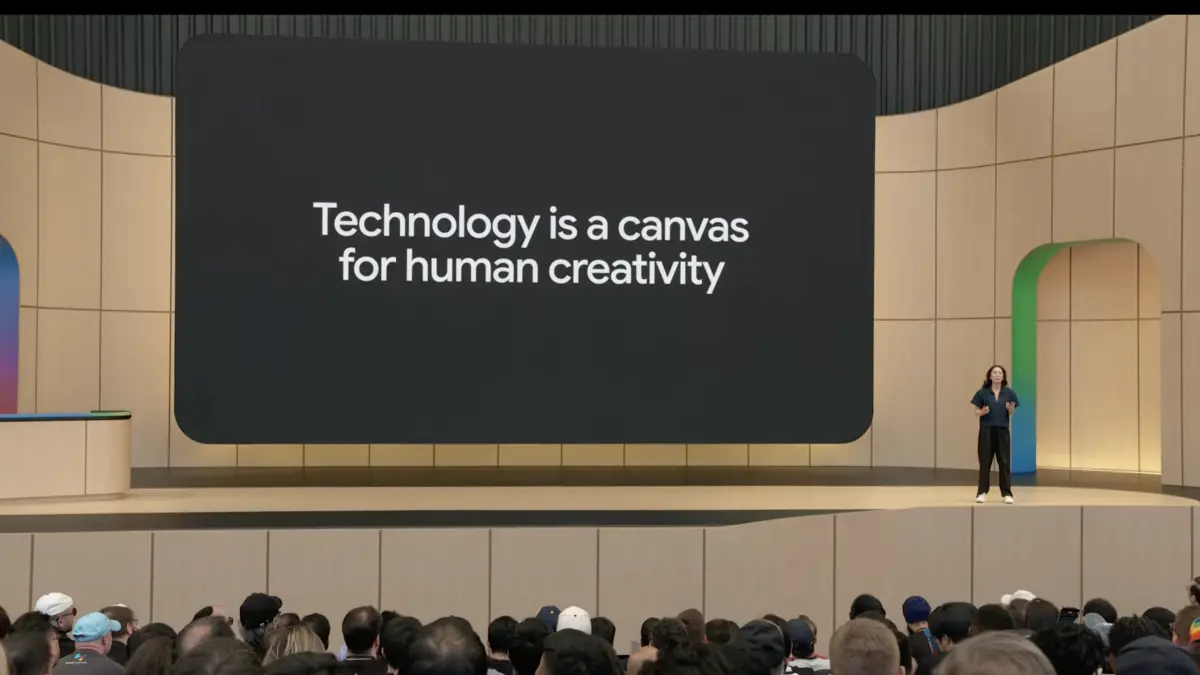
At Google I/O 2025, CEO Sundar Pichai set the stage by coining the term "Tokenmaxxing," a nod to the astronomical scale of AI processing happening globally — quadrillions of operations per day. This year's conference marked a definitive shift: Google is now an AI-first company, embedding intelligence across its ecosystem. For YouTube, the world's most-watched video platform, that means two key upgrades that leverage Google's latest generative AI breakthroughs. While the event was packed with updates to Gemini models and multimodal capabilities, YouTube users received features that aim to enhance creation and discovery.
The first announcement centers on YouTube Shorts, the platform's answer to TikTok. Google introduced Gemini Omni, a new AI world model described as "two-directional multimodal" — capable of generating content from any input type to any output type. Previously, Remix on Shorts allowed users to combine existing clips with basic editing tools. Now, with Gemini Omni integrated into Shorts Remix, creators can issue advanced AI prompts to generate videos that blend original content with AI-synthesized elements. For instance, a user could take a video of a dance and instruct the AI to "add a glowing trail" or "transform the background into a fantasy landscape." The AI then produces a seamless, complex remix that respects the original content's structure while adding new layers. Importantly, all such videos automatically receive an AI-generated content label and metadata linking back to the source material, maintaining transparency. Additionally, YouTube expanded its likeness detection tool to all creators aged 18 and older. This tool helps identify videos where a creator's face appears to have been altered or generated by AI, addressing concerns about deepfakes and unauthorized digital replicas.
The second update is not a feature inside YouTube itself but a new way to integrate YouTube with Google Search. Called Ask YouTube, this feature is part of Google's AI Mode in Search. When a user poses a complex or specific question — such as "how to teach a child to ride a bike" or "explain the concept of quantum entanglement with a visual example" — Google Search will now return a tailored, interactive response that includes relevant YouTube videos directly embedded in the search results page. Instead of showing a list of links, the AI Mode generates a conversational answer that can incorporate video tutorials, step-by-step guides, or explainers. Users can navigate through these videos without leaving Search, making the experience more fluid. Google claims that Ask YouTube "entirely reimagines" how people discover video content, moving from keyword-based listings to a dialogue-driven interface. The feature is currently in testing but will roll out across the United States in summer 2025.
These announcements arrive amid a larger industry shift toward AI-powered creation and search. Competitors like TikTok have already integrated AI effects, while Microsoft's Bing has incorporated video into its Copilot responses. Google's advantage lies in its vast repository of video data and its ownership of both the YouTube platform and the underlying search infrastructure. By combining Gemini Omni's generative capabilities with Shorts, Google encourages creators to produce more unique, personalized videos without advanced editing skills. This could democratize content creation, allowing users with minimal technical knowledge to produce professional-looking remixes. Meanwhile, Ask YouTube aims to break down the barrier between searching for information and watching videos, potentially increasing watch time and engagement for YouTube creators whose content appears in these AI-generated responses.
The broader context of Google I/O 2025 included announcements about Gemini 2.0, improvements to Google Photos, and new multimodal search features in Lens. However, the YouTube updates are particularly significant because they affect the largest user-generated content platform on the internet. YouTube Shorts, which launched in 2021, has grown to over 50 billion daily views. Adding Gemini Omni could accelerate that growth by making the platform more attractive to creators who want to experiment with AI-generated effects. The likeness detection tool, meanwhile, is a crucial step toward protecting creators' identities in an era where AI can easily replicate faces and voices. Google has faced criticism in the past for not doing enough to police deepfakes on YouTube, and this tool, combined with mandatory labeling, attempts to build trust among the creator community.
On the search side, Ask YouTube represents a natural evolution of Google's long-standing strategy to make information universally accessible. Traditionally, video results appeared as thumbnail links in Search, but the AI Mode changes the paradigm. The system can understand the context of a query and select the most relevant moments within a video, allowing users to jump directly to the informative segment. For example, a search for "how to fix a leaky faucet" might bring up a five-minute tutorial but start playing at the exact point where the repair step begins. This level of interaction requires sophisticated video understanding and alignment between the search index and the YouTube catalog. Google's investment in AI, particularly the development of large multimodal models like Gemini Omni, makes such fine-grained retrieval possible.
The rollout of Ask YouTube will proceed incrementally, with early users able to test it under Google's Search Labs program. Feedback during the testing phase will shape how the feature handles diverse queries, from academic concepts to DIY instructions. Google has been careful to note that the feature will not replace traditional search results entirely; rather, it offers an alternative for queries that benefit from visual explanation. YouTube creators stand to gain significant exposure if their videos become the recommended content within AI Mode responses, since the embedded player allows seamless viewing without leaving the search page.
Turning back to Shorts, the integration of Gemini Omni is not limited to remixing existing videos. Future updates may allow users to generate entirely new Shorts from text prompts, based on the model's ability to create "anything from any output." This aligns with Google's vision of a unified AI platform where content flows across modalities — text, image, video, and audio. The mandatory AI label ensures that viewers are aware when content has been synthetically created or modified, addressing regulatory concerns and ethical considerations. YouTube has also stated that it will continue to refine its detection algorithms to spot unlabeled AI-generated content, maintaining platform integrity.
As Google continues to pivot toward AI, these YouTube updates illustrate how the company is weaving intelligence into every layer of user interaction. Whether it's making creation easier through generative remixing or making discovery smarter through conversational search, the goal is to reduce friction between human intent and digital action. The summer rollout of Ask YouTube and the gradual deployment of Gemini Omni in Shorts will test how well these AI tools resonate with billions of users worldwide. For now, the stage is set for a new era of video on the internet, one where AI acts not as a replacement for human creativity but as an accelerator.
Source: Mashable News